Choosing a mattress
Choosing a mattress is easier when you start with three things: the size your bed needs, the kind of feel you enjoy and the way the mattress works with your bed base. This guide walks through each decision so you can compare mattresses with confidence. Every Revival Beds mattress is handmade to order. You can try different models at our Nottinghamshire showroom or call and speak to one of our team.
1. Measure the mattress space in your bed
Start with the space where the mattress will sit, rather than the bed frame’s outside dimensions. The posts, rails and curves of a wooden bed can make its overall footprint larger than the mattress it takes. If you are replacing a mattress, check its dimensions and the space inside the frame. If you are buying a new bed as well, check the mattress dimensions listed for that specific design.
Common UK mattress sizes are:
| Size |
Standard mattress dimensions |
| Single |
90 × 190 cm |
| Double |
135 × 190 cm |
| King |
150 × 200 cm |
| Super king |
180 × 200 cm |
These are a starting point. Our Platinum and Diamond collections are also available in Eastern King, Emperor and Caesar sizes. Mattresses in any of our available widths can be made up to 8 ft long if required. Check the exact dimensions of the mattress you order and the bed it will fit, especially for older frames, larger sizes and made-to-measure beds. We can talk through the options before you order.
2. Compare how mattresses are constructed
Pocket sprung mattresses have individual springs that respond separately to movement. Spring count is one detail, but it does not determine firmness or quality on its own: spring tension, upholstery and the complete construction also matter.

Some models add a latex layer for a different responsive feel. Memory foam has a more contouring feel; a pocket memory mattress combines it with pocket springs. Gel-infused latex is a separate construction from gel foam. Compare the complete mattress rather than choosing solely by a material label or a promise that one layer will keep everyone cool.
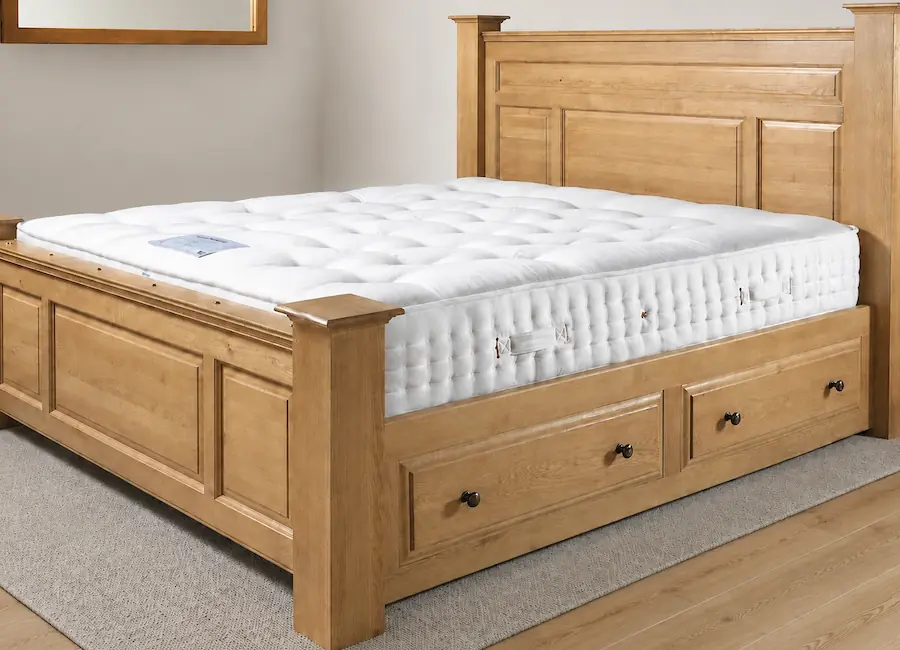
Our guide to mattress types explains these options in more detail. You can also explore the current Henry Smeaton range.
3. Find the feel that suits you
Soft, medium and firm describe how a mattress feels, but those labels can differ between models. A higher spring count does not automatically mean a firmer mattress. Spend time trying several constructions and feels in a position you normally sleep in, and notice whether you feel comfortable and supported.
If you share a bed, test it together if possible. Where your preferences differ, ask us about a zip-link configuration: two mattresses join together, and each side can have a different feel. Separate mattresses are also easier to rotate than one large mattress.
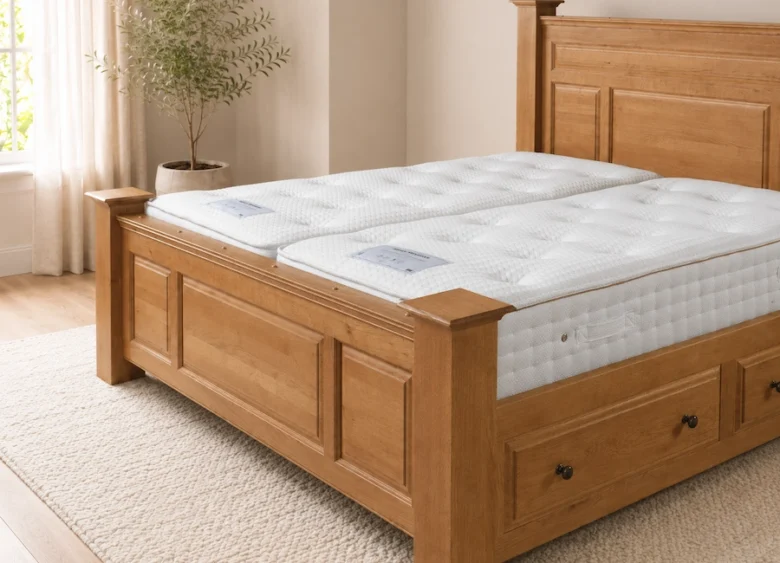
We generally recommend considering a zip link for super king and wider sizes, including Eastern King, Emperor and Caesar. The size and weight of a single mattress can make getting it into the bedroom and handling it more difficult. For king size, we particularly recommend discussing a zip link for heavier mattresses such as the Diamond collection, with its higher spring count, or where access is tight. A double zip link can also be considered where access is especially difficult. These are recommendations rather than fixed rules: a home with easy access, such as a bungalow, may make a single large mattress practical. We will discuss the model, size, weight and route to the bedroom with you before you order, including which zip-link combinations are available.
If you have a specific medical concern, seek advice from an appropriate healthcare professional. For material sensitivities or allergies, check the exact specification of the mattress you are considering.
4. Check the base and the practical details
The mattress and bed base work together. Check the type and condition of your base and any mattress maker guidance about slat spacing or support before ordering. Our separate bed slats guide explains the difference between solid and sprung slats.
Think about access to the bedroom, too: note any tight stairs, turns or doorways and share the measurements when discussing a large mattress. The size and weight of the mattress both matter when getting it into place. We can talk through the best configuration before you order to avoid surprises on delivery day.
Our mattresses do not need turning: rotate them according to the care guidance for your model. The Next Gen Memory mattress is an exception because it is a single piece of foam and does not need turning or rotating.
When should you replace a mattress?
There is no one replacement age that applies to every mattress. Look for visible sagging or damage, changes in comfort or support, or a mattress that no longer fits your needs. Also check for lumps, a tendency to roll toward the middle, or too little room for the people sharing the bed. These are reasons to reassess whether your current mattress still suits you; there is no fixed number of signs that automatically means it must be replaced. Check any care instructions for your model. If you are buying a new mattress, we can collect and recycle your old one for an additional fee; ask about this service when ordering.
Come and compare the range
Browse our mattresses and book a showroom visit to compare the feel of display models. You are also welcome to call and speak to one of our team. Tell us your bed dimensions, what you like or dislike about your present mattress, and anything we should know about access to the bedroom. We can discuss the size, construction and feel of a mattress handmade to order for you.