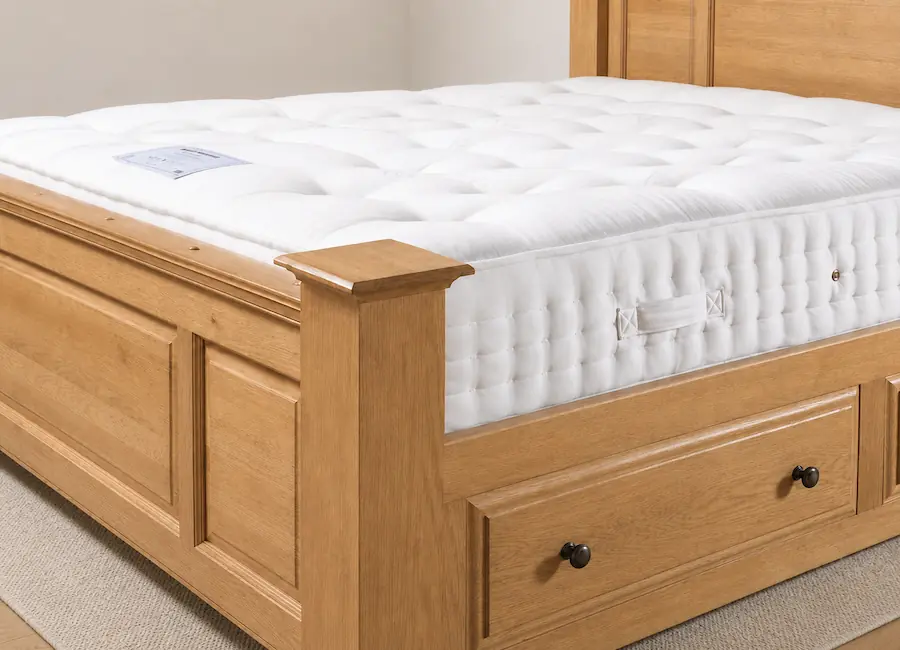
A mattress protector and a simple care routine can help keep your mattress in good condition. Cleaning advice varies by construction, fabric and filling, so start with the instructions supplied for your particular model before using any product or treatment on the mattress itself.
Here is a practical approach to everyday care and accidental spills. It is especially important to check the instructions for a handmade mattress: a treatment that is suitable for a removable cover may not be suitable for the mattress beneath it.
Keep the surface protected
Use a suitable mattress protector or under-blanket and wash it according to its label. Change and launder your bed linen regularly. A protector helps prevent moisture and marks from reaching the mattress; it is much easier to clean or replace than the mattress itself.
Let the bed air when changing the sheets, and keep the mattress and base clear of trapped moisture. Check the protector still fits well, especially if the mattress is deeper than your previous one.
How to clean the surface
Follow the care label and the instructions for your model. For Henry Smeaton mattresses, our information and care guide says to soft brush the mattress regularly and never use a vacuum cleaner on it. Brush gently rather than pressing hard into the fabric or tufting. Clean the surrounding bed frame and base according to their own care instructions.
Avoid treating the whole mattress with a generic cleaning recipe. Do not soak it or assume that a steam cleaner, upholstery machine, bleach, peroxide, vinegar or other household product is suitable. These treatments may affect the cover or internal materials. If a model has a removable cover, follow the separate washing instructions for that cover; do not assume the mattress itself is washable.

What to do if something spills
Remove the bedding and protector promptly. Blot up the liquid with a clean, absorbent cloth without rubbing or pressing it further into the mattress. Then check the product’s care instructions before applying water or a cleaner. Use a treatment only if it is approved for that mattress or cover.
Allow the affected area to dry fully before replacing the bedding. If a large amount of liquid has entered the mattress, a stain persists or you are unsure how to deal with bodily fluids, contact us or a suitable professional for advice specific to the model. Surface cleaning cannot necessarily reach moisture or damage inside the mattress.
Rotate a Henry Smeaton mattress; do not turn it
All Henry Smeaton mattresses have one sleeping surface, so do not flip them over. Rotate them head to foot according to the care instructions for your model, and ask for help with a heavy mattress. The Next Generation Memory mattress is the exception: it does not need turning or rotating.
Other manufacturers may make mattresses that need turning. If you own a different brand, follow its own instructions rather than applying Henry Smeaton’s care rules to it.
The base matters too. Check that the mattress is used on a suitable bed base and that the slats, centre support and fittings remain sound. Our bed slats guide explains the different types of support.

When cleaning is not enough
Cleaning can address surface dirt and some marks, but it cannot restore lost support, a persistent dip or damaged internal materials. Our guide to when you should change your mattress explains the signs to check without setting an arbitrary replacement age.
If you decide to replace it, use our Mattress Buying Guide to compare your options, or book a showroom visit to try the current range. Our mattresses are handmade to order. If you buy a new mattress from Revival Beds, ask about collection and recycling of your old one; an additional charge applies.