There is no single age at which every mattress needs replacing. Materials, construction, use and care all affect how it holds up. A calendar reminder can prompt you to inspect your mattress, but its condition and how it feels to you matter more than a fixed number of years.
Here are the signs to check, and the practical steps to take before deciding whether you need a new one.
Look for changes in shape and support
Remove the bedding and inspect the surface in good light. Look for a noticeable dip where you usually sleep, lumps, damaged fabric or areas that feel very different from the rest of the mattress. Notice whether you tend to roll toward the middle or can feel parts of the internal construction through the comfort layers.

Some settling and softening can be normal, and one visible mark does not automatically mean a mattress must be replaced. Check the maker’s care instructions and any applicable guarantee. If the mattress has lost the even support or comfort you need, it is worth comparing replacements.
Ask whether it still fits the people using it
Your needs may change even while the mattress remains in reasonable condition. Two people may find that the bed no longer gives them enough room, or that the feel they once liked no longer suits them. If you share a bed, consider whether each person can settle comfortably and whether movement from one side disturbs the other.
Try to identify what has changed. Discomfort on waking can have many causes, so it cannot by itself diagnose a mattress problem or a medical condition. If pain is persistent or concerning, speak to an appropriate healthcare professional.
Check the base and care instructions first
A damaged or uneven bed base can affect how a mattress feels. Inspect the slats, centre support and fittings, and check that the mattress is suitable for the base. Our bed slats guide explains what to look for in a slatted base.
Follow the care guidance for your particular model. Some mattresses should be rotated; others have a designated sleeping side and must not be flipped. A suitable protector and prompt attention to spills can help keep the surface in good condition. Cleaning may address a mark or odour, but it cannot restore worn support or damaged internal components.
Decide whether to keep, care for or replace it
If the mattress still feels comfortable and supportive, age alone is not a reason to discard it. If it has persistent sagging, uneven support or damage that care cannot resolve, compare new mattresses. Test different constructions and feels where possible rather than choosing by a universal firmness rule or spring count.
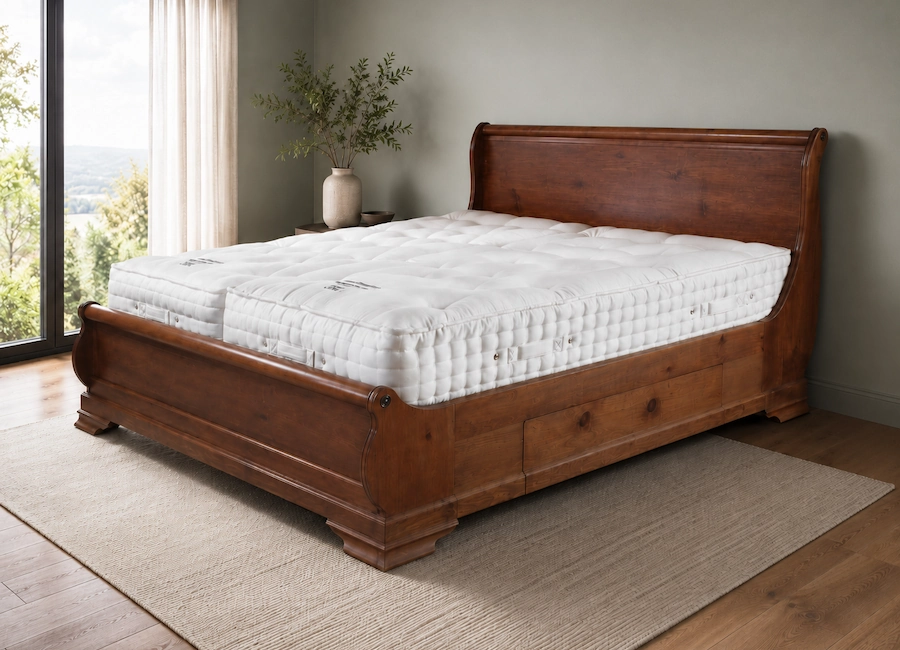
Our Mattress Buying Guide covers sizes, materials, feel and bed-base compatibility. You can also book a showroom visit to try mattresses and discuss the size and access to your room. Revival Beds makes mattresses to order; we can talk through the options before you buy.
If you purchase a new mattress from us, ask about collection and recycling of your old one. This is an optional service with an additional charge.