A contemporary bedroom can feel current without following one strict look. Start with the bed and the other pieces you will use every day, then build the room around their shape, wood finish and scale. A thoughtful mix of natural materials, colour, lighting and texture can make the space feel modern and comfortable at the same time.
Here are 12 practical ideas to help you plan a contemporary bedroom.
1. Let the bed set the direction
The bed is usually the largest piece in the room, so use its shape to guide the rest of the design. A clean-lined frame can suit a minimalist room, while a more detailed headboard can add character without needing lots of decoration. The Metro bed has an angled headboard and works well with modern or industrial-inspired interiors.

2. Start with the wood finish
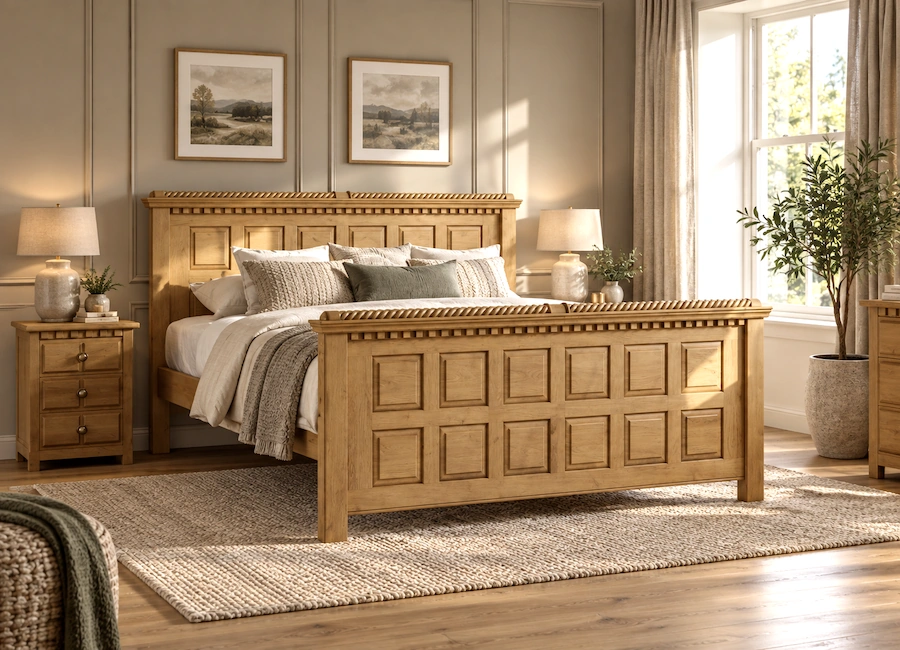
Choose the bed finish before settling on every other colour. Natural oak can sit comfortably beside warm neutrals; darker finishes can give pale walls more contrast. If you are choosing between finishes, request free wood samples and compare them in the room’s own daylight.
3. Use a simple base palette
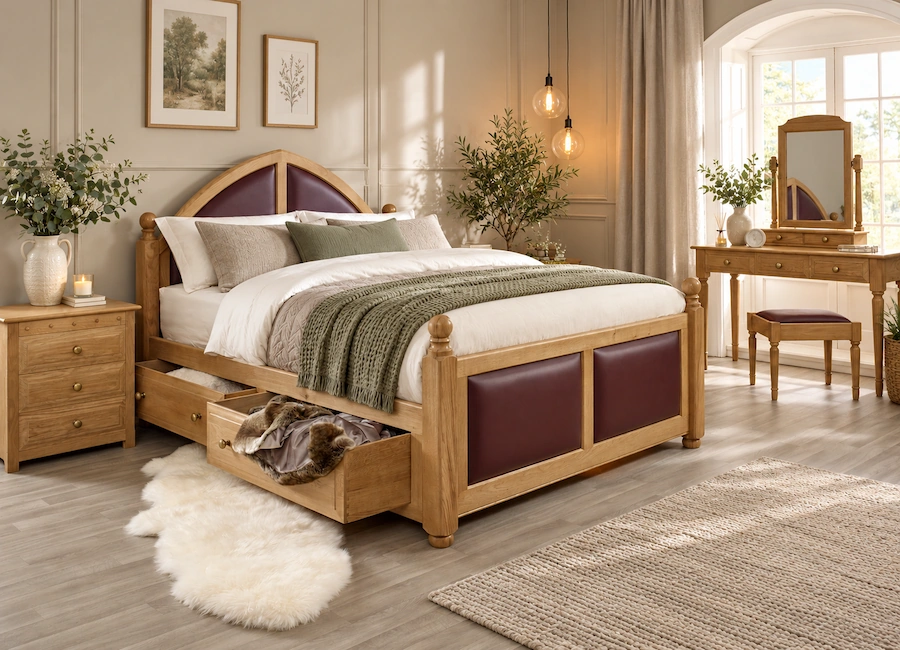
A restrained base of two or three colours makes it easier to add personality without making the room feel busy. Cream, soft grey and warm white can all work with wood. For more colour, use an existing feature such as the grain of the furniture or the bedding as your starting point. Our guide to colours that work with oak furniture offers more ideas.
4. Add one confident accent
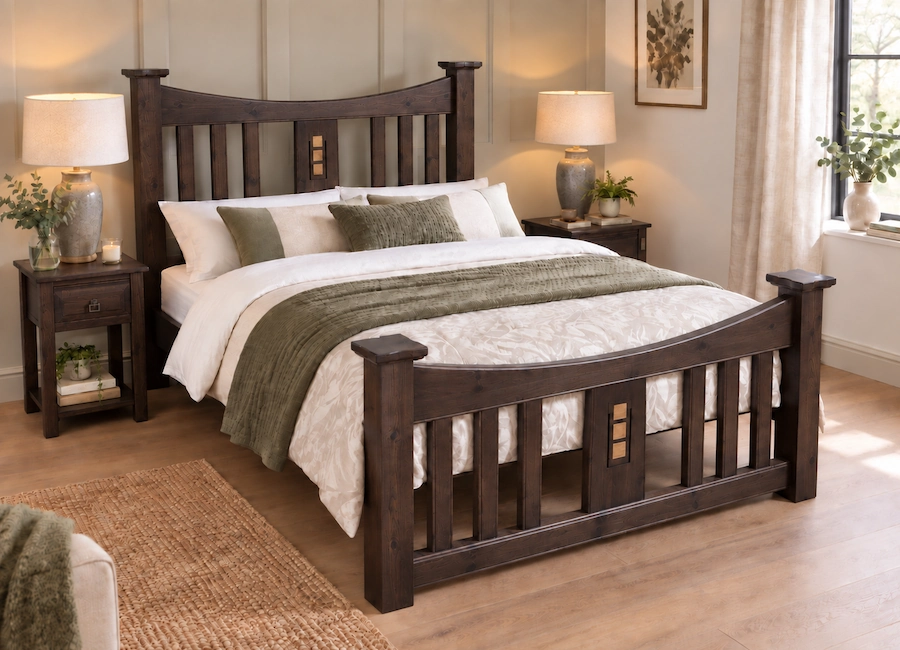
A single accent colour can give a neutral room a clear focal point. Try it in artwork, a cushion or a wall behind the bed, then repeat a smaller detail elsewhere so the colour feels connected. You do not need to use it on every surface.
5. Layer texture as well as colour
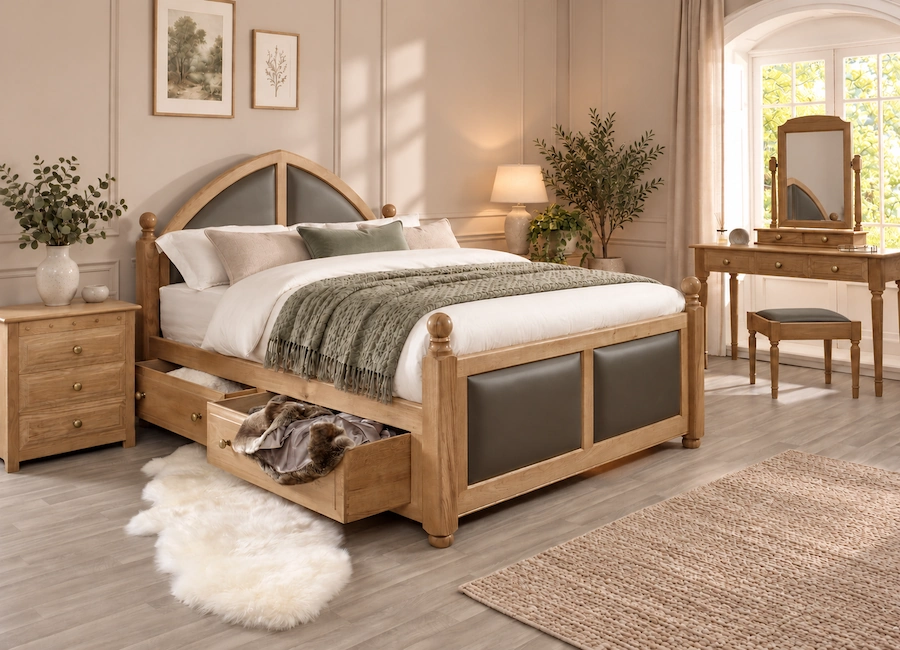
Natural wood, woven fabric, linen-look bedding and a soft rug bring depth to a room without relying on strong patterns. Keep the main pieces simple and let a few tactile details make the space feel less formal.

6. Balance dark and light tones
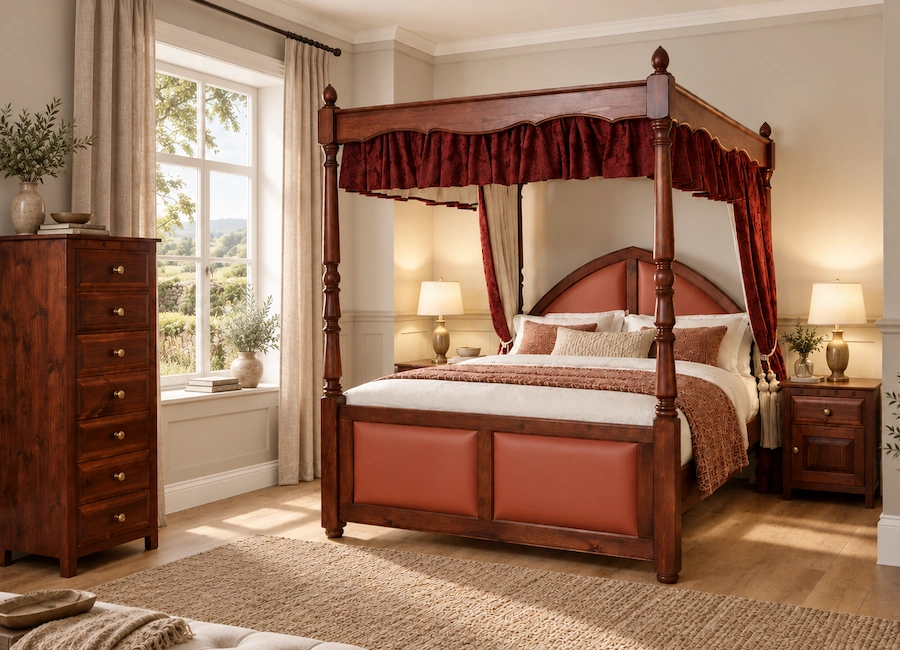
Dark colours can create a strong backdrop, but using them on every wall may make a small room feel enclosed. Pair a darker feature with lighter bedding, curtains or flooring, and check the result in both daylight and evening light.
7. Keep bedside storage useful
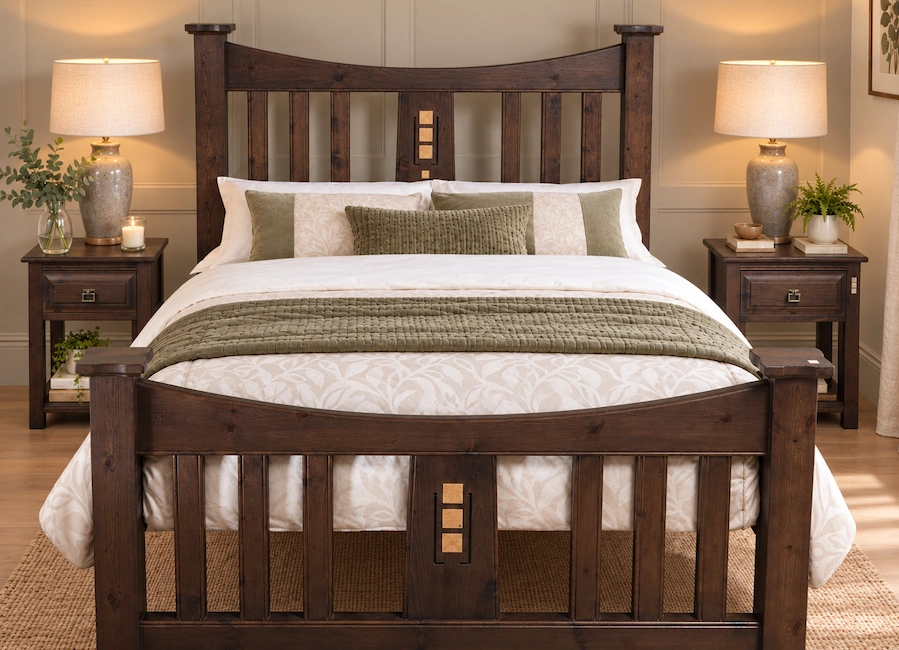
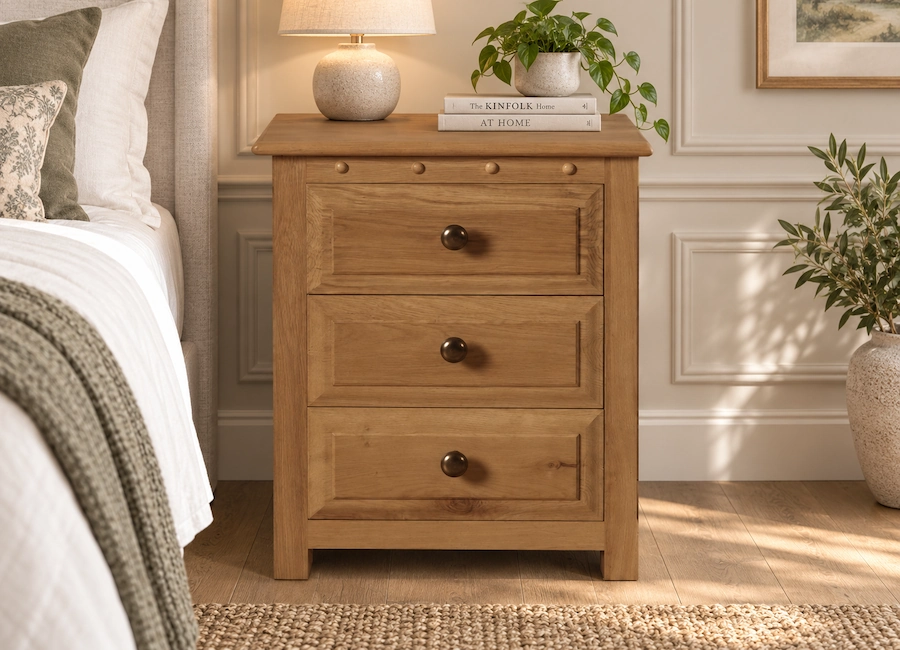
A bedside cabinet gives everyday items a place to go and helps the top of the bed area stay calm. Choose a size that leaves enough room to move around the bed and open drawers comfortably.
8. Make the most of natural light
Keep window areas as clear as practical and use mirrors or lighter surfaces to help daylight travel around the room. If privacy requires curtains or blinds, choose a style that works with the room’s palette and does not compete with the bed.

9. Layer your lighting
A ceiling light is useful for general light, while bedside lamps or wall lights make reading and winding down easier. Aim for lighting that can be used in separate layers, so the room can change from bright and practical to softer in the evening.
10. Use industrial details selectively
Exposed brick, metal and visible timber can give a bedroom an industrial feel. One or two details are often enough; balance harder surfaces with bedding, curtains or a rug. See our loft-style bedroom ideas for more inspiration.

11. Give one wall extra character
Panelling or a carefully chosen wall finish can frame the bed and add depth. Keep the other walls quieter so the feature remains the focus. Our guide to half-wall panelling ideas shows another way to add architectural detail.
12. Choose details that feel personal
A bedroom should work for the people who use it. Pick a small number of meaningful details—artwork, a favourite colour, a well-loved chair or a bedside light—and leave enough clear space for the room to feel restful and easy to use.

Plan your bedroom around furniture you can see in person
If you are comparing wood finishes, request free samples. You can also visit the Revival Beds showroom in Retford to see our beds and bedroom furniture in person.