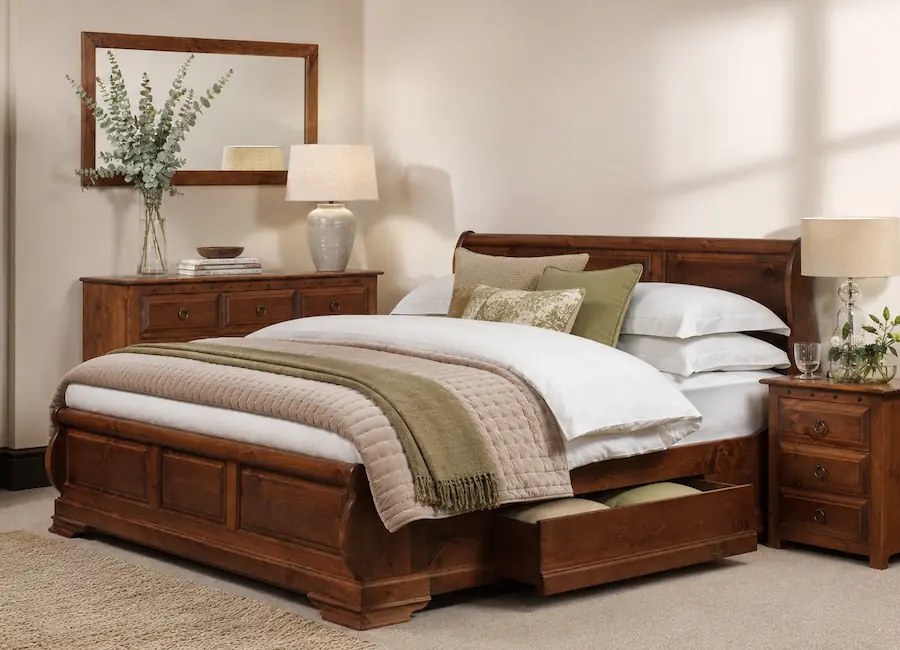
The base beneath your mattress can change how the bed feels and how well the mattress is supported. Two beds with similar looking mattresses may have different foundations, so it is useful to know what you are buying before you choose a frame or a mattress.
What is the best type of bed base? There is no single winner. A suitable base supports your particular mattress, fits your room and provides the feel and practical features you want. Here is how the main options compare.
What is a bed base?
The bed base is the surface and supporting structure beneath the mattress. A bed frame describes the visible structure around it, such as the headboard, footboard and side rails. The same style of frame may be supplied with different bases, so ask what actually sits under the mattress.
The terms can overlap. For example, a divan is often sold as a complete upholstered base, while a wooden bedstead commonly holds a set of slats. A platform may describe a low bed style or the more continuous surface supporting its mattress. Look at the construction, rather than relying on the label alone.
Divan bases: upholstered and compact
A divan is usually a box-shaped upholstered base on which the mattress sits. Some have a firm platform top; others have a sprung top with more give. That distinction can affect the finished feel, so check which version you are trying in a showroom. You can also find divans with drawers or lift-up storage.
A divan may suit you if you prefer a simple outline, want integrated storage, or are buying a mattress and base as a specified pair. Ask what supports the mattress beneath the upholstery, how the two sections join on larger sizes, and whether the chosen mattress is approved for that top. The fabric conceals much of the structure, so request construction details and check the guarantee.
Check divan upholstery, storage and aftercare
Ask what is beneath the covering, how it should be cleaned and how fittings can be reached for maintenance. Upholstery can conceal different constructions, so inspect or request the details of the actual model.
For drawers or a lifting base, compare usable dimensions, opening clearance and the manufacturer’s stated load limits. There is no universal drawer weight limit for every divan or wooden bed. For access and storage choices, see our storage-bed comparison.
Slatted bases: solid or sprung
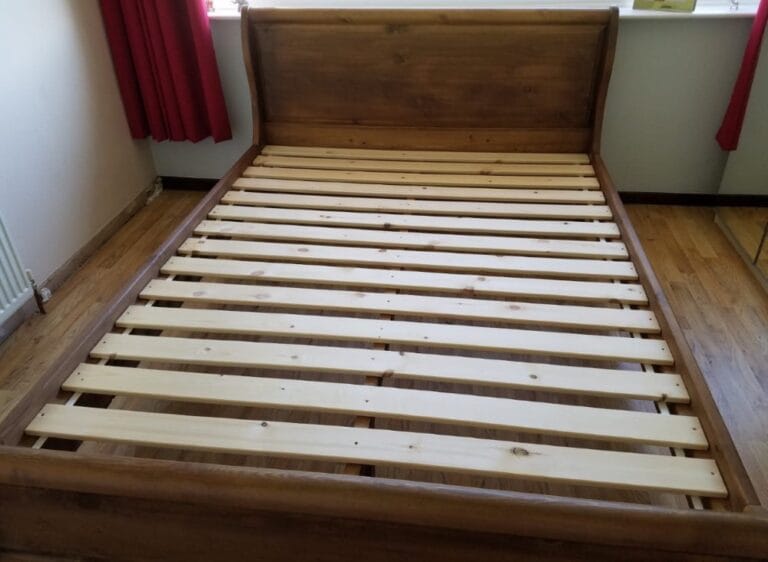
A slatted base uses a series of slats across the width of a frame. Solid slats are straight and relatively rigid; sprung slats curve and flex under weight. This can change how responsive the complete bed feels, although the mattress supplies much of the comfort. The spacing, dimensions, fixings and support beneath the slats are as important as their name.
Slats leave gaps beneath the mattress, but that does not make every slatted bed suitable for every mattress. Check the mattress manufacturer’s requirements for the maximum clear gap, minimum slat width and any additional support or pad. Wider beds may also need a centre support. Our guide to solid and sprung bed slats explains these details in more depth.
At Revival Beds, our solid wooden bed frames use 18 solid pine slats, each 70mm wide and 17mm thick, with gaps of approximately 40–45mm. They are cloth-webbed and can be secured to the supporting bearers and a centre bar where required. Ask us to check the base requirements for your chosen mattress if you are keeping one you already own.
Platform, adjustable and specialist bases
Some frames support the mattress on a more continuous platform instead of spaced slats. Check whether the surface is ventilated and whether the mattress maker permits that arrangement. An adjustable base moves parts of the mattress to different positions; it needs a mattress designed or approved to bend with it. A box spring is another type of foundation, but its construction and mattress pairing vary by supplier.
These are distinct options, not simply different names for a divan or a slatted bed. If you are comparing a particular model, ask its maker exactly how the mattress is supported.
Which type suits your mattress and room?
Start with the mattress manufacturer’s base instructions. If you are buying a new mattress, ask the supplier which bases it can be used on. If you are keeping your current mattress, check its label or care documents before ordering a new bed. A base that looks substantial may still fall outside that mattress’s requirements.
Then compare the practical details:
- Feel: Try the mattress on the same kind of base you intend to buy. A sprung divan top or sprung slats may feel different from a firm platform or solid slats.
- Support: Check slat gaps, centre rails, divan construction and how the frame’s joints are secured. Inspect existing parts for damage before reusing them.
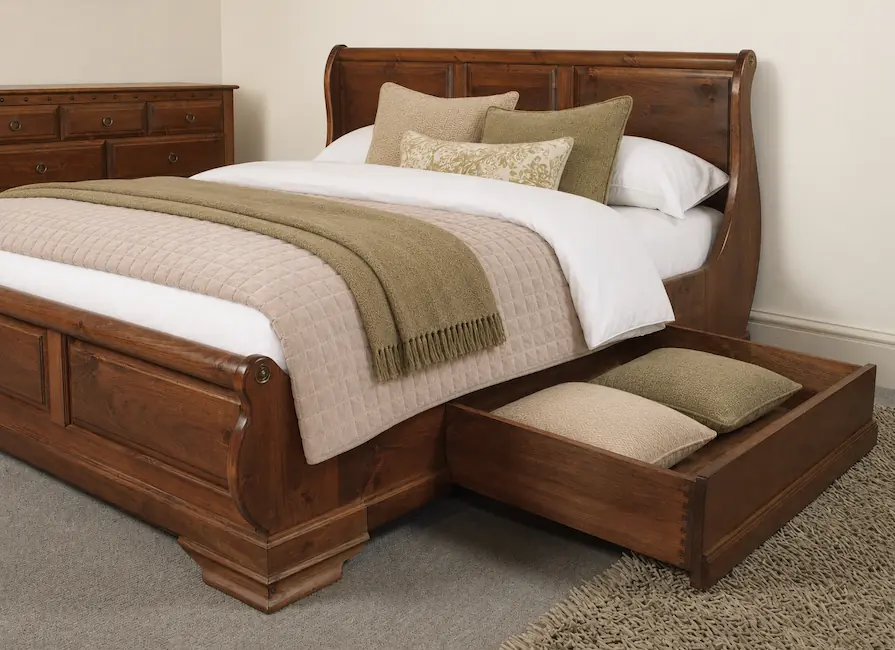
- Storage: Drawers need side clearance to open; a lift-up base needs room above. Our under-bed storage drawers are an option on many wooden bed designs.
- Access: Measure stairs, landings, doors and tight turns, and ask about the largest component and installation. Revival Beds checks access with customers and can make larger beds in kit form, with headboard and footboard posts assembled on site.
- Care: Ask how to look after the base, what the guarantee covers and how to reach fittings if they need checking.
So which bed base is best?
Choose the complete bed and mattress combination that meets the mattress maker’s requirements and suits the feel, style and space you prefer. A well-made divan can be the right choice for one room; a carefully supported slatted wooden frame may be the better fit for another. The label alone cannot tell you which will last longer or feel more comfortable.
If you like the character of solid timber, explore our wooden beds and ask us about the base beneath each design. You can request free wood samples to compare finishes at home or book a showroom visit to see a bed and discuss mattress compatibility in person.