
There is no single replacement date that suits every bed frame. How long a frame remains useful depends on its construction, how it is used and cared for, and the condition of its parts. Rather than replacing a frame because it has reached a particular age, check for signs of wear and whether it still provides stable support.
Before deciding, separate the frame from the mattress, slats and floor. A noise or uncomfortable night does not automatically mean the frame needs replacing. These checks can help you work out what needs attention.
1. Check the joints and fittings
Look at the corners, side rails, headboard connections and other accessible fittings. If a bolt or fixing has worked loose, follow the manufacturer’s instructions to tighten it with the correct tool. Avoid overtightening or forcing a damaged part.
If a fitting will not stay secure, the surrounding wood is split, or the joint moves after tightening, contact the manufacturer or a suitable repairer. The problem may be repairable, but repeated movement needs to be checked before you continue using the bed.
2. Inspect the rails, legs and supports
Check the main rails, legs and centre support for cracks, breaks or movement. Pay attention to parts that carry the frame’s weight. If a structural piece is damaged or the bed feels unstable, stop using it until the maker or a repairer has assessed it.
Do not assume a mark or small surface blemish means the frame has failed. Look for damage that affects the strength or stability of the bed, and ask the manufacturer if you are unsure.
3. Look over the slats and their supports
Remove the mattress if it is safe to do so, then inspect the slats and the ledges or holders that support them. Check for broken, bowed or displaced slats and for damage to the centre rail or feet. Use replacement parts that match the frame and follow its care instructions.

For more detail on the differences between solid and sprung slats, see our bed slats guide.
4. Find the source of any squeak or movement
A squeak can come from a joint, slat, mattress, floor or another part of the room. Check accessible fixings and test the frame carefully without the mattress, if the maker’s instructions allow it. If the noise continues, use our guide to finding and fixing a squeaky bed before deciding that the frame must be replaced.
If you find a cracked rail, broken support or movement that makes the bed unstable, do not keep using it until it has been assessed.
5. Check that the mattress and frame are compatible
Make sure the mattress is the correct size for the frame and sits evenly on its support. If it dips or feels uncomfortable, the mattress may be the cause; if the empty frame moves or the slats are damaged, inspect the base as well. Follow the care guidance for both products before changing or returning either one.
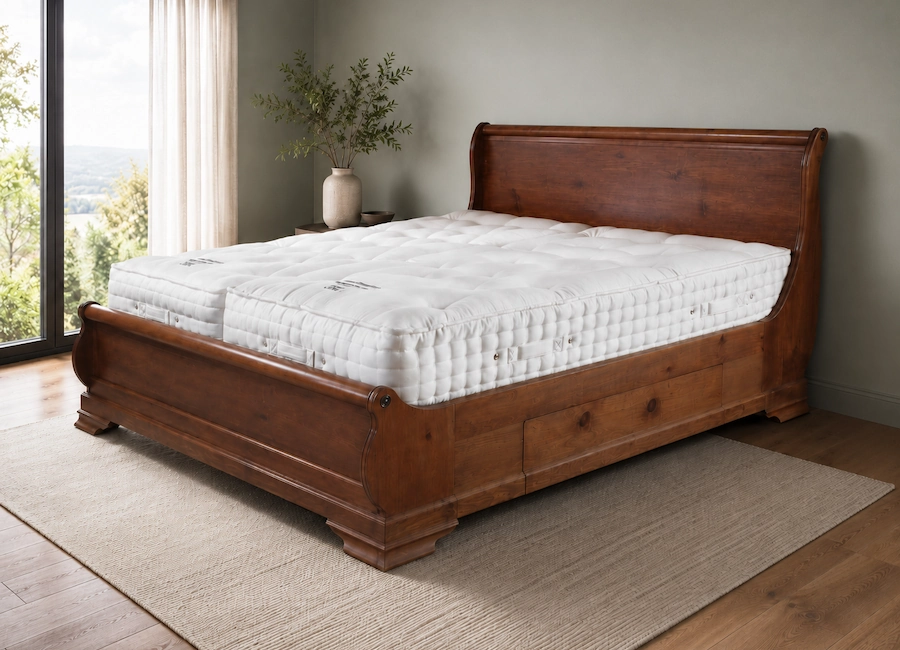
6. Consider whether the frame still suits your needs
You may want a different size, style or storage arrangement as your home changes. That is a design choice rather than proof that the existing frame has worn out. If it remains stable and works for you, there may be no need to replace it solely because you have redecorated.
Repair or replace?
Age alone is not enough to decide. A loose fitting may be straightforward to address, while a damaged rail, leg, joint or support may need professional assessment. Check whether the bed is covered by a guarantee and contact its maker before modifying it or fitting non-original parts.
If the frame cannot be made stable, no longer suits the mattress or room, or the maker advises replacement, compare frames based on their construction, size and support requirements. You can explore Revival’s solid wood bed range or book a visit to our showroom to see the products in person. Request free wood samples if you are comparing finishes.