Solid wood bedroom furniture offers visible grain, natural variation and a choice of styles and finishes. Whether it is worth the investment depends on the individual piece: its construction, dimensions, storage, care and the way you intend to use it.
These nine considerations bring together the benefits you may value and the buying checks that help you judge them. A solid wood or handmade description alone cannot promise a particular lifespan or make every other material inferior.
1. Natural grain and variation
Wood grain and colour give furniture much of its character. Compare samples and, where possible, see a finished piece before choosing. Natural variation means that a sample is a useful guide rather than a promise that every part will look identical.
Ask what each component is made from. Veneer is a thin layer of wood applied to a substrate; it is not inherently an imitation material. Assess the actual specification rather than assuming that an even appearance proves or disproves quality.
2. A choice of shapes and styles
Timber furniture can suit a range of room schemes, from simple outlines to more detailed traditional designs. Start with shapes you enjoy and the building you live in, then consider how the furniture sits beside the floor, walls and existing pieces.
A style that appeals to you is more useful than a promise that a material will never go out of fashion. Compare the full outline as well as individual details such as handles, panelling or turned legs.
3. Storage and dimensions that suit your routine
List what you need to store before choosing a wardrobe, chest or bedside cabinet. Compare the internal space, shelf arrangement and drawer or door openings with those belongings.
Measure the external footprint too. Allow space to walk past, use a stool or chair, open drawers and reach nearby sockets. Check the delivery route and any assembly requirements; a piece that fits the floor plan may still need careful access planning.
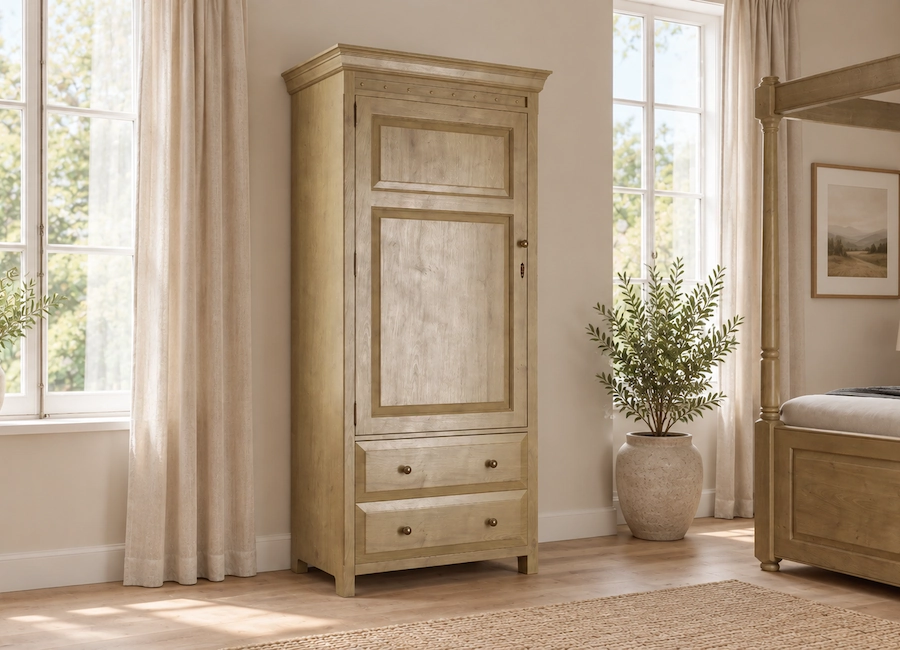
4. Construction you can ask about
Look for an assembled piece that sits securely, with doors and drawers that work smoothly. Ask about the joints, fittings, drawer construction and anchoring requirements. A named joint is useful information, but does not establish the quality of the entire piece.
Our dovetail guide explains one construction detail. Compare workmanship and intended use alongside the materials, rather than treating handmade, flat-pack or a particular timber as a complete verdict.
5. Finishes you can compare in the room
Place finish samples beside existing furniture and flooring under both daylight and evening lighting. You can coordinate pieces without every wood tone or material being identical.
Made to order does not mean that every dimension or design detail can be altered. Confirm the offered model sizes and finish options in writing. Revival does not offer painted furniture or colour matching; ask the team about the options for the individual piece.
6. Care and repair questions you can answer before buying
Ask for written care instructions for the furniture and finish you choose. Before applying wax, polish or a cleaning treatment, confirm that it is recommended for that surface. A general six-month routine should not be assumed suitable for every finish.
Follow the supplied advice about cleaning, heat, sunlight and spills. Ask what to do if a surface is marked or a fitting needs attention, and whether repair support is available. Clear aftercare is more useful than an unconditional lifetime claim.

7. Information about the maker and sourcing
If workmanship matters to you, ask where the piece is made, which processes are involved and how the finished furniture is checked. A workshop visit can help you understand the products and discuss practical questions.
If sourcing matters, request specific evidence for the timber or other materials in the piece you are considering. Do not assume that every solid wood product has the same environmental credentials, or that a handmade label establishes certification.
8. Value based on your intended use
Compare the purchase price alongside delivery, installation, maintenance, repair options and the current guarantee. Check the guarantee terms, including what is covered and the care expected of the owner.
A more expensive piece is not automatically the best purchase. Consider whether its storage, dimensions and appearance suit your needs and whether you understand the total cost. Neither a high price nor solid timber can guarantee savings from avoiding future replacements.
9. A room scheme you can adapt
Keep useful existing furniture where it still meets your needs. A different arrangement, lighting or textiles may help a room feel more cohesive without replacing every piece.
When adding furniture, consider how it could work if your storage needs or layout change. Choose around the room and the people using it, rather than assuming that every piece must come from a single matching collection.
Compare the current furniture and finishes
Explore Revival’s bedroom furniture and wooden beds. You can book a showroom visit or request free wood samples before deciding.
Photographs: Revival Beds product and collection imagery. Confirm current models, dimensions, finishes and order conditions for the piece you choose.