Dovetail joints connect two pieces of timber through interlocking pins and tails. They are commonly used at drawer corners, where the joint’s shape helps resist the front being pulled away from the sides.
At Revival Beds, dovetail joints are part of our drawer construction. When comparing bedroom furniture or underbed storage, look at the complete drawer as well as this individual detail.
How do the pins and tails fit together?
The wider tails fit between matching pins cut into the adjoining piece. A close fit and suitable assembly matter: the shape alone cannot compensate for poor materials or workmanship. Rockler’s dovetail guide illustrates the parts and common variations.
Must dovetails be cut by hand?
Dovetails can be produced with hand tools or machinery and jigs. The method alone does not establish the quality of the finished drawer. Check the fit and finish, and ask the maker how the drawer is constructed.
Is bedroom furniture still available with dovetail joints?
Dovetails remain one option for drawer construction. Revival Beds uses them in its bedroom furniture, but it is better to compare the actual piece than assume all handmade or mass-produced furniture uses the same joints.

What else should you check?
Open and close the drawer, look at the alignment and finish, and ask about its base, support and intended load. Check the internal space against the things you want to store and allow enough room in the bedroom to open it fully.
A dovetail is one part of the design. The materials, dimensions, assembly, hardware and care all affect how furniture works in everyday use. No single joint guarantees that a piece will last a lifetime.
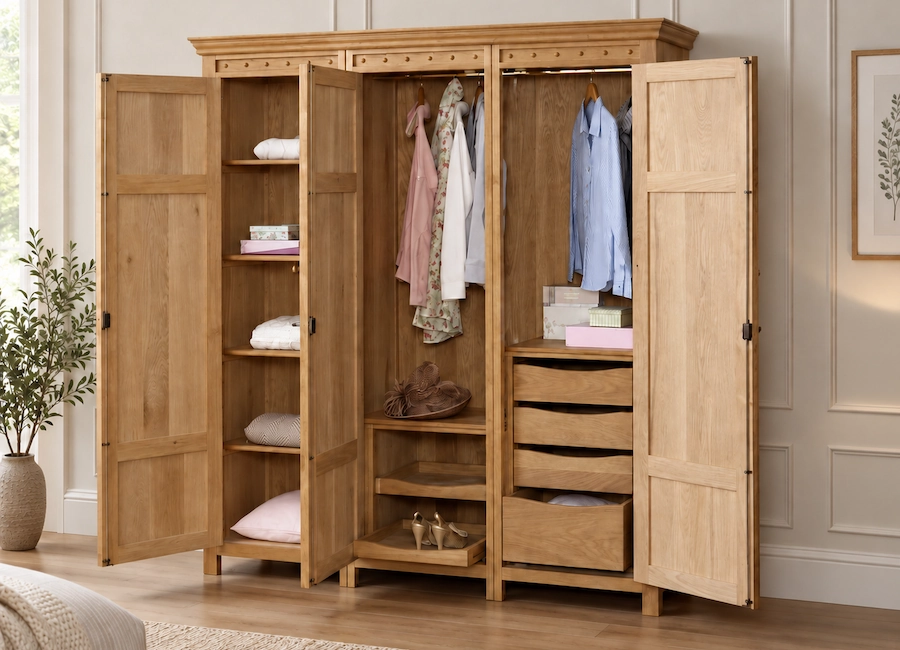
See the furniture in person
Revival Beds handcrafts wooden beds and bedroom furniture in Nottinghamshire. Request wood samples or visit our showroom to compare designs and finishes for your bedroom.