The skills behind handmade wooden beds
Making a wooden bed brings together timber preparation, machining, joinery, assembly and finishing. The work involves different skills at different stages, from shaping components to checking the completed surface.
This guide looks at those roles rather than presenting an old staff list or fixed total of years’ experience as a current team directory.
Preparing and assembling the components
Machining and joinery turn timber into components that fit the chosen design. The maker needs to consider dimensions, the joints and fittings, and how the parts will be assembled.

For a closer look at one construction detail, read our dovetail-joint guide. A named joint is one part of the product, rather than proof of the quality of the complete frame.
If you need a particular size or arrangement, ask the team what is feasible for the selected design instead of assuming every piece can be made smaller or larger.
Preparing and finishing the surface
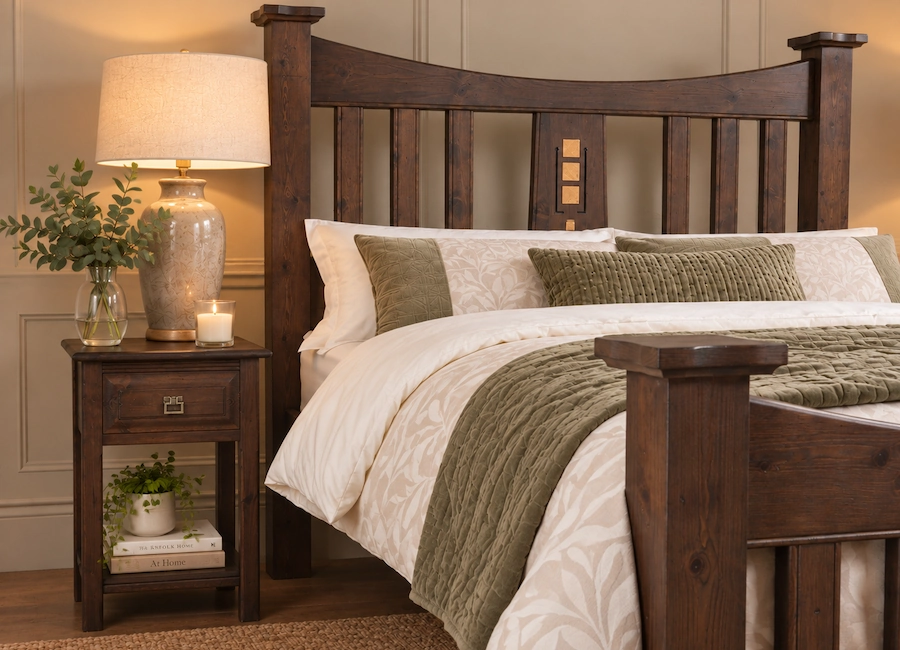
Sanding and finishing affect how the completed timber looks and feels. Compare the offered finishes with samples, and ask about natural variation and care requirements.
The current finish guide shows the choices to discuss for a particular product. Revival does not offer painted furniture or colour matching.
To understand the finished piece, compare its materials, construction and aftercare together. Our bed-quality guide offers a practical checklist.
Compare the current range
Explore Revival’s wooden beds and bedroom furniture, book a showroom visit or request free wood samples.