Grey walls can work with a range of wood furniture. The best pairing depends on the shade of grey, the wood finish, the light in the room and the atmosphere you want. Lighter wood can keep a scheme feeling open, while a deeper finish gives more contrast.
You do not have to match every piece of furniture exactly. Start with the bed or the largest item that will stay in the room, then choose smaller pieces and accessories that sit comfortably alongside it.
Start with the shade of grey
Grey paint can look warmer or cooler depending on its undertone and the light in the room. Some greys have a hint of beige or pink; others appear more blue. A colour that looks soft in daylight may seem cooler under a lamp.
Before choosing a wood finish, look at the wall colour in the morning, afternoon and evening. If you are redecorating, place paint samples beside the furniture or wood samples before committing to a full room.
Lighter wood with grey walls
Pale and natural-looking wood can make a bedroom with light grey walls feel calm and spacious. This combination keeps the contrast gentle and lets the grain and shape of the furniture remain visible.
If both the walls and furniture are light, add depth through bedding, a rug or curtains. A darker accent in one or two places can give the room definition without making it feel busy.
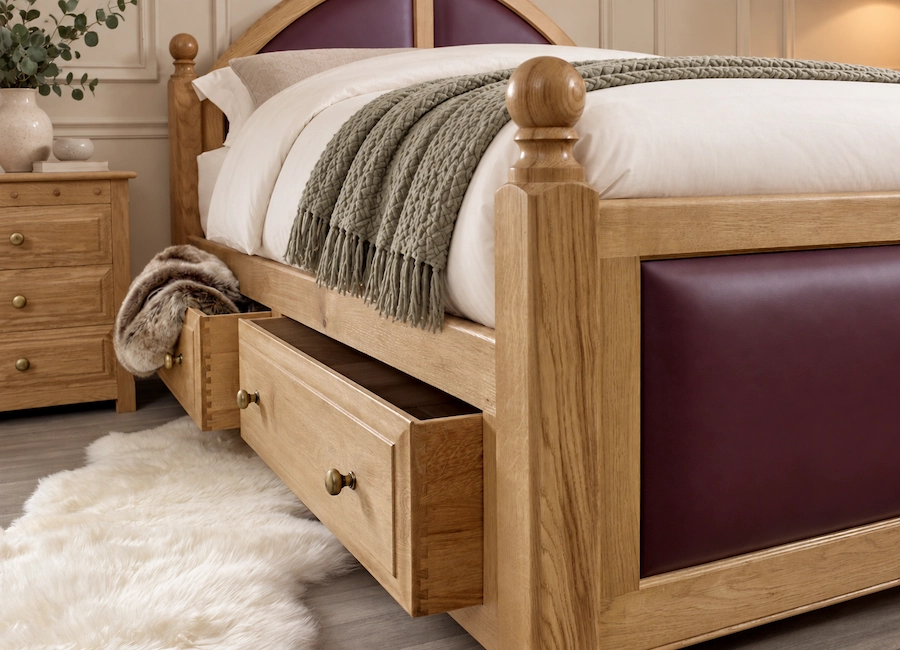
Mid-tone wood for warmth
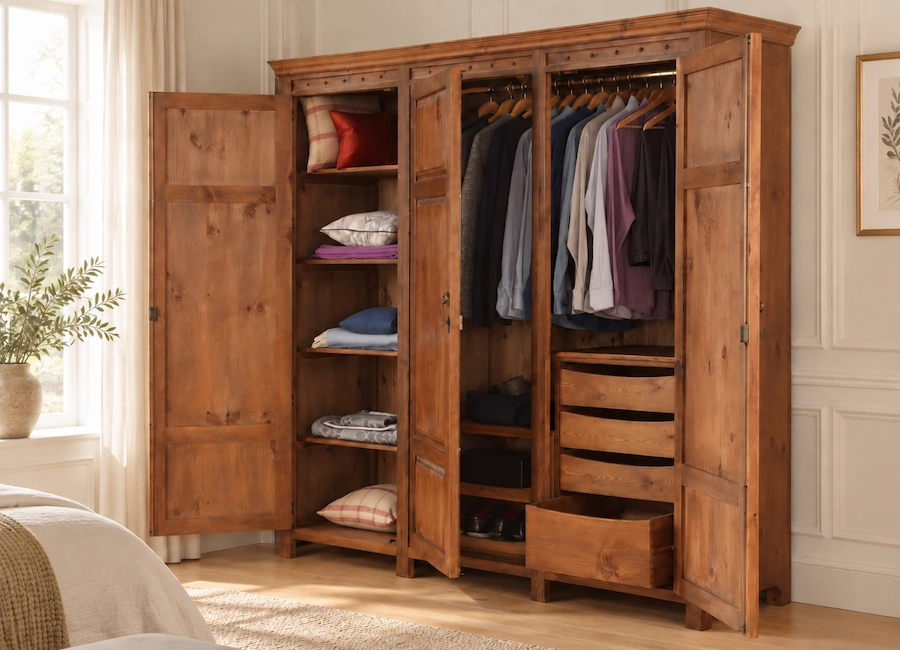
A mid-tone wood finish creates a clearer contrast with grey walls and can make the room feel warmer. Try repeating that wood tone in a bedside cabinet, a frame or another small detail so the main piece feels connected to the rest of the room.
Grey varies from room to room, so compare the finish with your actual wall colour. If the wood appears too orange or too cool beside the grey, test a different finish or bring the two colours together through bedding and accessories.
Dark wood for contrast
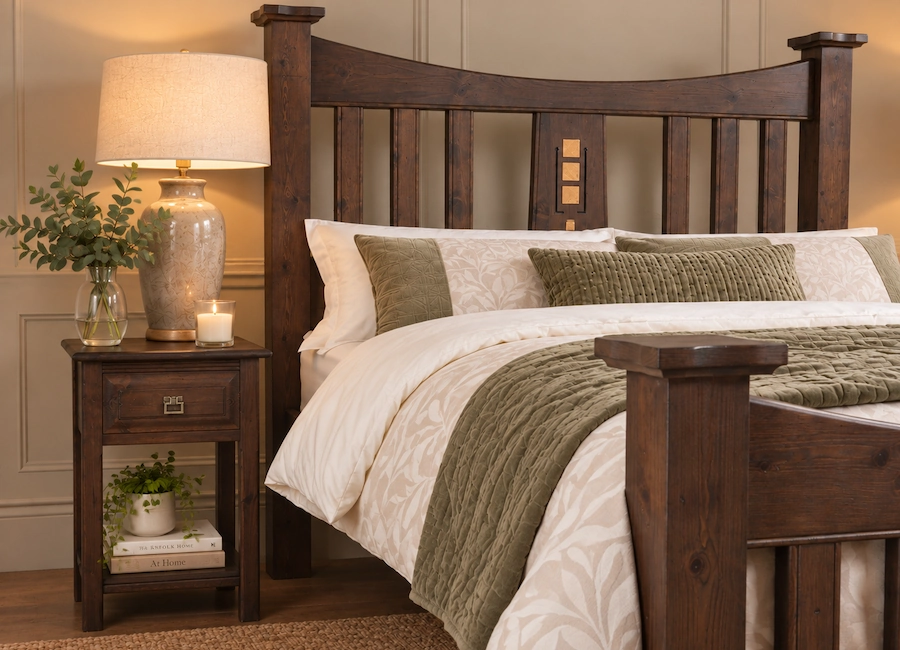
Darker wood can stand out against pale grey walls and give a bedroom a more defined look. Balance the contrast with lighter bedding, curtains or a rug, particularly if the room receives limited daylight.
With charcoal or another deep grey, dark furniture creates a more tonal scheme. Use lighter fabrics or a contrasting wall to keep the main features easy to see. Testing samples in the room helps you judge how much contrast feels right.
Do wood and grey have to match?
No. A room can include more than one wood tone, provided the overall combination feels deliberate. Try to keep one finish dominant and repeat any second tone sparingly. Furniture does not need to come from a matching set to work together.
Soft furnishings can help connect the wood and the walls. Grey bedding, a warm neutral throw or a rug that includes both colours can bring the scheme together without adding another large piece of furniture.
Choose a finish in your own room
Photos and screens can change how grey paint and timber appear. You can request free wood samples and compare them against your walls, floor and bedding. You can also visit our factory showroom to see furniture finishes in person.
Browse our solid wood bedroom furniture to explore the range. For more ideas about broader bedroom palettes with oak, read our guide to colours that go with oak bedroom furniture.
What colour wood goes with grey walls?
Light, mid-tone and dark wood can all work with grey walls. Choose by comparing the wood finish with the exact grey, the room’s lighting and the other materials you plan to keep. Test samples in the room before deciding.