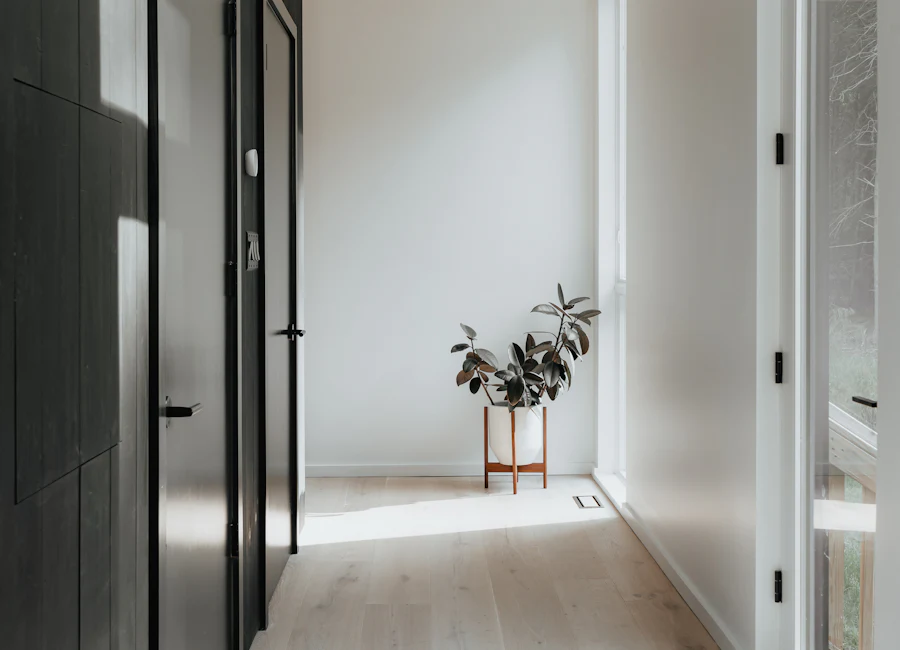
Hallways are core parts of a home. Usually considered practical, they can actually be beautiful places and a breath of fresh air when you enter. Hallways are high traffic areas and usually contain common items such as shoes, coats and maybe a place for your keys.
In many cases, hallways can be overlooked or seen purely for storage. So how do you create a functional space that wows? Here are 10 hallway ideas for marrying the practical and the beautiful (with a few smart design ideas for good measure).
- Keep Your Colour Theme Consistent
- Add An Accent Feature
- Save Space With Sliding Doors
- Be Imaginative Under The Stairs
- Make Lighting The Feature
- Adjust The Mood With Movable Wall Lighting
- Smart Design: Built-In Doormat
- Try A Vintage Wallpaper
- Non-Slip Vinyl Flooring
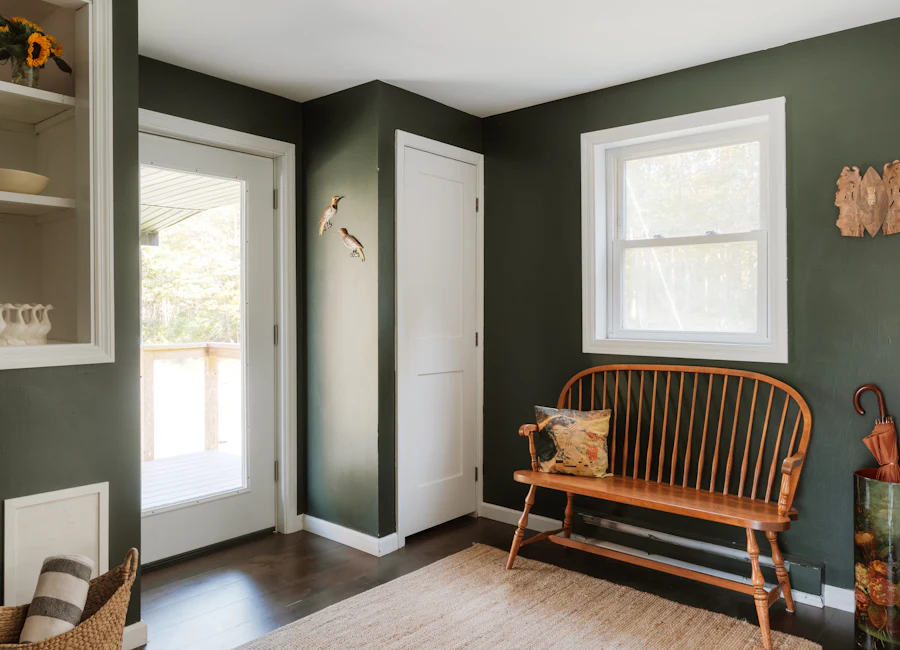
- Add Functional Furniture
Featured photograph: Photo by Clay Banks on Unsplash (licence). Images illustrate room planning or materials; they are not Revival product photographs.
1. Keep Your Colour Theme Consistent
Traditionally, hallways aren’t areas where you relax, rather the place you use to get to other rooms. A hallway can stretch from the front door to the upstairs bedrooms – so why not continue a colour scheme from the moment you walk in to the moment you open your bedroom door?
In houses featuring beautiful solid hardwood furniture pieces, you should take care to choose a colour scheme that complements them. For example, a soft neutral wall with a muted green accent can sit beside darker timber and continue up a staircase.
Colour schemes are present in many rooms of the house, so having one in the hallway shouldn’t be a radical choice. How about representing a transition from one part of the house to another by slightly altering the colour scheme as you move?
2. Add an Accent Feature
While we’re on the theme of colour, let’s talk about accent features. Some hallways benefit from being minimalistic in colour – think white or cream walls to really make use of natural light (or make up for the lack of it).
An accent feature, like an intricately painted door or piece of furniture, can really draw the eye. Having one or two and a matching flooring pattern can help to create a fun and visually pleasing look. Little splashes of bright colour from plants or flowers can make all the difference.
3. Consider how doors use the space
Mark the swing of existing doors on your layout before choosing storage. A sliding system may help in some rooms, but it needs suitable wall or pocket space and an appropriate track.
Discuss any proposed replacement with a suitable installer, including the door’s fire-safety role and the building’s requirements. Keep the entrance and escape route clear.
4. Be Imaginative Under the Stairs
Some homes have a lot of space under the stairs, which is a prime candidate for good storage design. These are highly under-utilised areas, but hold a lot of potential.
Why not create a useful mix of cupboards and drawers to maximise storage space? Alternatively, you could house a small desk under the stairs and create a quick access office space. One out-of-the-box idea is to turn the space under your stairs into a wine cellar. If there’s no limit to your imagination, there’s no limit to how interesting your home can be.
5. Make Lighting the Feature
Natural light can be limited in hallways, so a bright lighting fixture can be crucial. However, these aren’t just practical items; they can be luxurious, eye-catching additions to your hallway. You could go classic with an intricate chandelier or modern with a set of minimalist or boho-style hanging bulbs. Edison bulbs are a great way to achieve that industrial vibe everybody is trying to replicate right now. But like hallway design, your lighting choice doesn’t have to be strictly aesthetic. It can also be a highly functional choice too. For example, have you considered movable wall lighting?
6. Adjust The Mood With Movable Wall Lighting
Lighting is important. The wrong light, placing or bulb type can make a hallway feel cluttered or cold. One practical way of making a hallway a little more homely is to include movable (or retractable) wall lighting. Wall lights that move, such as sconce lights on pivots, allow you to reangle the direction of light according to your preference.
They can also be bought in groups, meaning your hallway won’t have one source of light and suffer from harsh, directional lighting. Consider buying two or three to complete the ‘runway’ feel of your hallway, a place dedicated to movement. Also, moveable wall lighting is easy to clean. You should consider investing in dimmable lights so you can adjust the mood in the hallway, depending on the time of day or year.
7. Plan a practical entrance mat
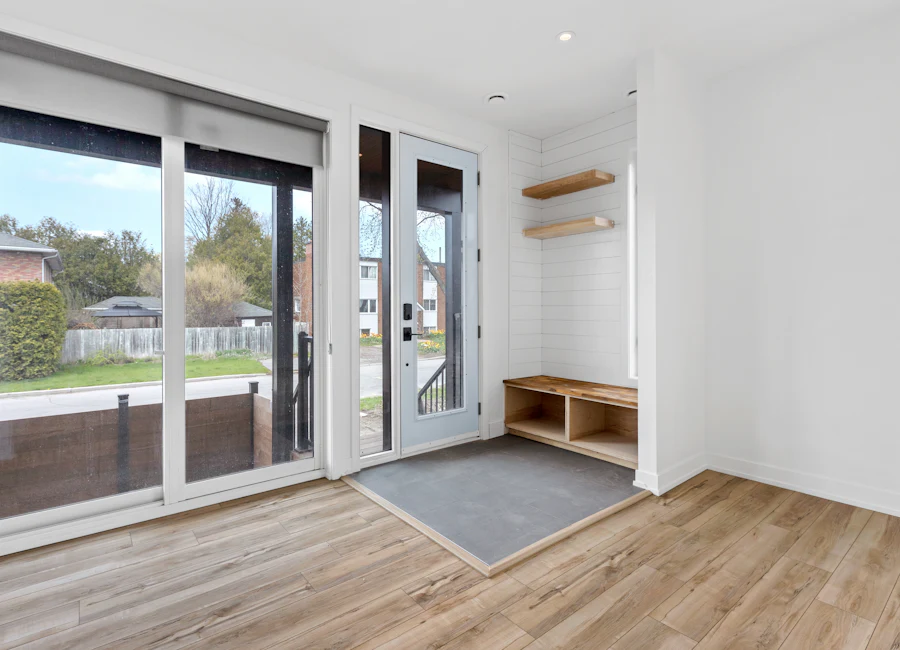
An entrance mat helps collect dirt before it reaches the rest of the house. Choose one that stays securely in place, clears the door and can be cleaned regularly.
A recessed mat may suit a planned renovation. Ask the flooring installer about a flush, secure fit and suitable edging. A recess alone does not guarantee that a mat cannot move or become a trip hazard.
8. Try a Vintage Wallpaper
Vintage wallpapers are very much back in style nowadays. In the opinions of connoisseurs, they’ve always been timeless.
Intricate patterns or image-laden print can give a hallway a period or bohemian feel, something to help stir your visual appetites. We need to realise that hallways don’t have to be functional spaces, they can be fun spaces too.
9. Compare flooring for your entrance
Look for a floor suitable for your household’s traffic, cleaning routine and likely wet footwear. Vinyl is one option alongside timber, laminate, stone and tile, with performance varying by product.
Check the selected finish’s slip-performance information, moisture limitations and installation requirements. Do not assume every vinyl floor is non-slip. Our hallway flooring guide gives more points to compare.
10. Add furniture that earns its space
List the shoes, coats, bags and everyday items that need a home. Compare a narrow cupboard, a bench designed for seating or a small cabinet, allowing enough room to walk past and open doors and drawers.
Keep damp footwear apart from dry textiles. Check a piece’s intended use and care requirements before putting it near a wet entrance. A chest or ottoman should only serve as a seat where that use is confirmed by its manufacturer.
Measure alcoves carefully and ask about available product sizes rather than assuming furniture can be made to any dimensions. For more layout ideas, see our boot room furniture guide.
Explore wooden beds and furniture
Browse Revival’s wooden beds and bedroom furniture. You can book a showroom visit or request free wood samples to compare the current finishes.