
Colour can completely change the feel of a bedroom, but a successful scheme is not only about choosing a fashionable shade. It needs to work with the light, the size of the room, the furniture and the way you want the space to feel at the end of the day.
The most useful starting point is to treat colour as a set of layers. Walls create the backdrop, the bed and furniture bring their own wood tones, bedding softens the room, and smaller accessories give you room to experiment. When those layers support one another, the bedroom feels considered without becoming rigid or over-styled.
1. Start with the elements that are staying
Before looking at paint cards, identify the parts of the room you are not planning to change. That might include the flooring, curtains, a solid wood bed, bedroom furniture or a favourite piece of artwork. These fixed elements already contain colours and undertones, so they should guide the palette rather than compete with it.
A warm timber finish, for example, can sit comfortably with soft creams, clay tones, muted greens and many deeper blues. A lighter oak finish can work well with gentle neutrals and natural textures. The aim is not to force every surface to match. It is to make sure the permanent pieces look as though they belong in the same room.
2. Decide how you want the room to feel
A bedroom used mainly for rest may suit a quieter background with colour introduced through bedding and accessories. A larger room can often carry a deeper wall colour without feeling crowded, especially when there is good natural light. If the room also includes a reading chair, dressing area or workspace, colour can help distinguish those zones while keeping the overall scheme connected.
Choose a few words before choosing a shade: calm, warm, airy, traditional, dramatic or contemporary. Those words make it easier to reject colours that are attractive on a sample card but wrong for the atmosphere you want.
3. Use one colour as the foundation
Most schemes benefit from one dominant background colour. It does not need to be white or beige, but it should be easy to live with across the largest surfaces. Walls, a large rug or substantial curtains can provide this foundation.
A restrained base gives the bed and furniture room to lead. It also makes future changes simpler because bedding, cushions and artwork can be refreshed without repainting the whole room.
4. Treat 60-30-10 as a guide, not a rule
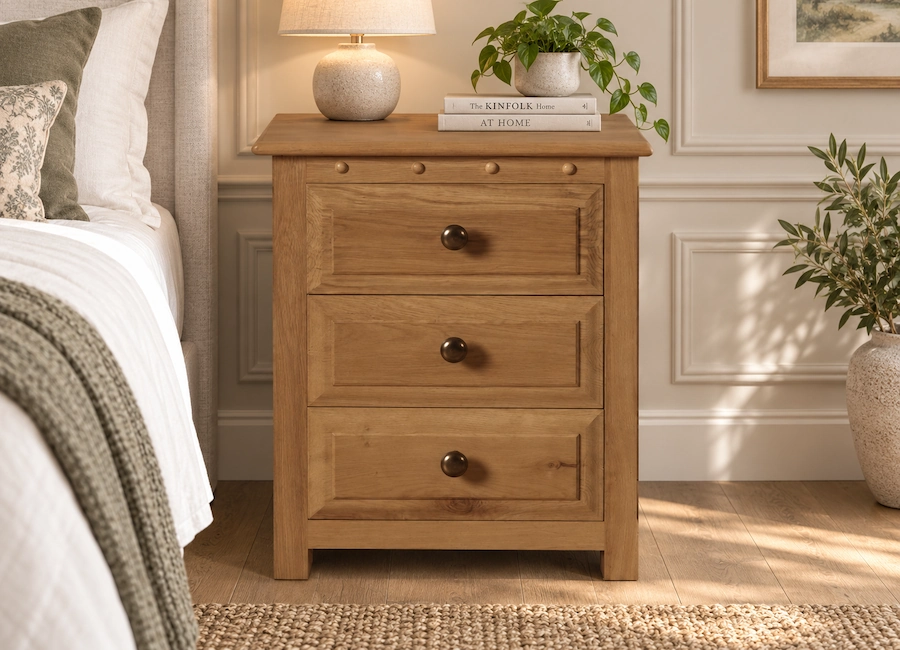
The familiar 60-30-10 approach can be a useful way to think about balance: a main colour across most of the room, a supporting colour on furniture or textiles, and a smaller accent used sparingly. The proportions do not need to be exact. The value of the idea is that it prevents every colour from competing for equal attention.
In a bedroom, the walls might provide the main colour, wood and bedding the supporting layer, and cushions, throws or artwork the accent. If the bed is the visual focus, keep the strongest accent close to it rather than scattering it evenly around the room.
5. Balance warm and cool tones
Warm colours can make a bedroom feel welcoming, while cooler colours can make it feel fresh and settled. Many successful rooms contain both. A cool blue wall can be softened by timber, woven fabric and warm lighting. A warm neutral can be balanced with green, grey-blue or crisp white details.
Pay attention to undertones. Two colours may both be described as grey, yet one can lean blue and the other brown. Comparing them beside the furniture and flooring is more reliable than choosing from a screen.
6. Test colour in the actual room
Light changes throughout the day, and a colour can look very different on opposite walls. Use tester pots or movable painted boards and look at them in morning light, afternoon light and after the lamps are switched on.
Place the sample beside the bed finish, flooring and bedding. If you are choosing a new bed or bedroom furniture, compare physical wood samples in the room before deciding. This is especially helpful when nearby colours have subtle warm or cool undertones.
7. Add depth with texture
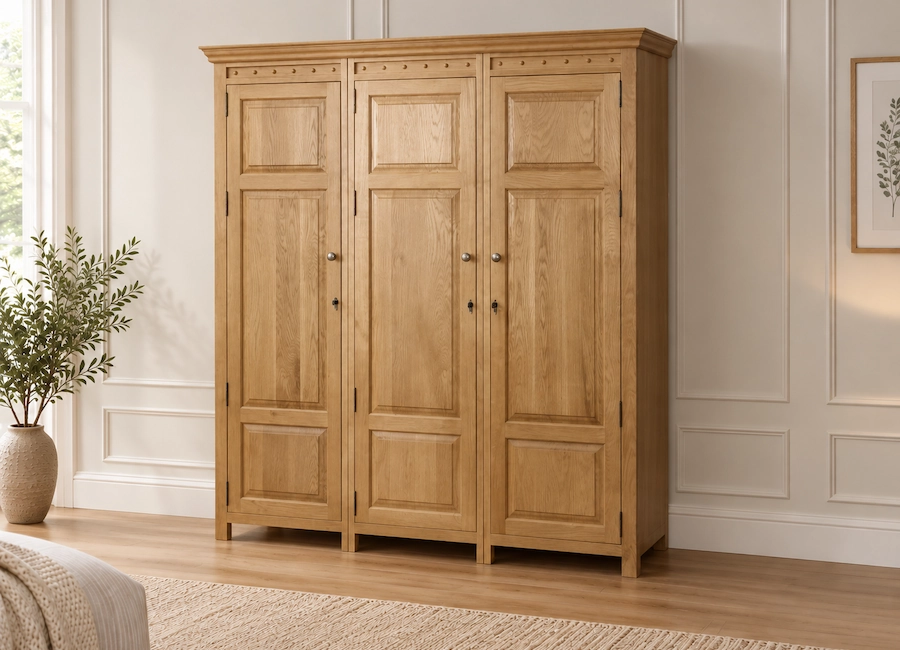
A room can feel flat even when the colours work well. Texture adds variation without introducing another competing shade. Linen, wool, leather, woven baskets, timber grain and a softly patterned rug can all add depth while staying within a controlled palette.
Repeat one or two textures in different places rather than using every material at once. A leather detail on a bed can be echoed by a small accessory, while a woven throw can connect with a rug or window treatment.
8. Keep trend-led colour easy to change
Trends can be useful for inspiration, but they do not need to control the whole room. Use bolder or more temporary colours on cushions, throws, lampshades, artwork and smaller accessories. These are easier to update than a bed, wardrobe or fitted flooring.
If you genuinely love a strong colour, there is no reason to avoid it. Give it a clear role and balance it with quieter surfaces. A scheme feels lasting when it reflects the people using the room, not simply the date it was decorated.
9. Review the room as a whole
Before committing, gather paint samples, fabric swatches, wood samples and images of the furniture in one place. Check whether the palette still works when the bed is dressed and the practical pieces are included. Handles, lamps, storage and window treatments may be smaller details, but together they influence the finished room.
A well-planned colour scheme should make the bedroom easier to live with. Start with what is staying, choose a clear foundation, test everything in the room and leave space for smaller changes over time.
Compare beds, furniture and wood finishes
Explore Revival Beds solid wood beds and bedroom furniture online, order wood samples to compare finishes at home, or book a showroom visit to see the collection in person.