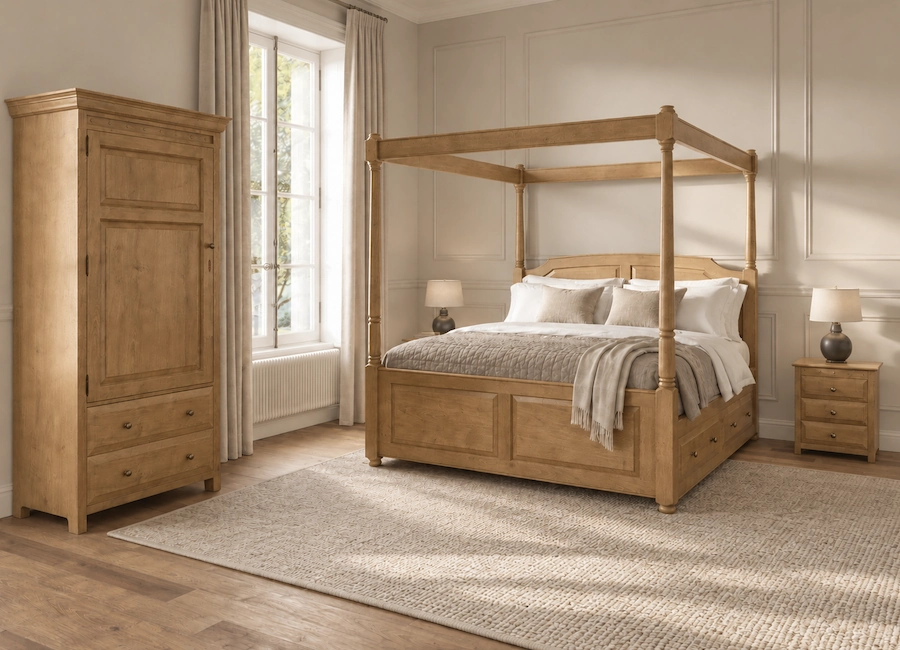
A royal-inspired bedroom can borrow decorative details from grand interiors without claiming to recreate a palace. This A-to-Z is a collection of styling options, not a list of essentials or a history of royal households. Choose the ideas that suit your room, budget and daily routines.
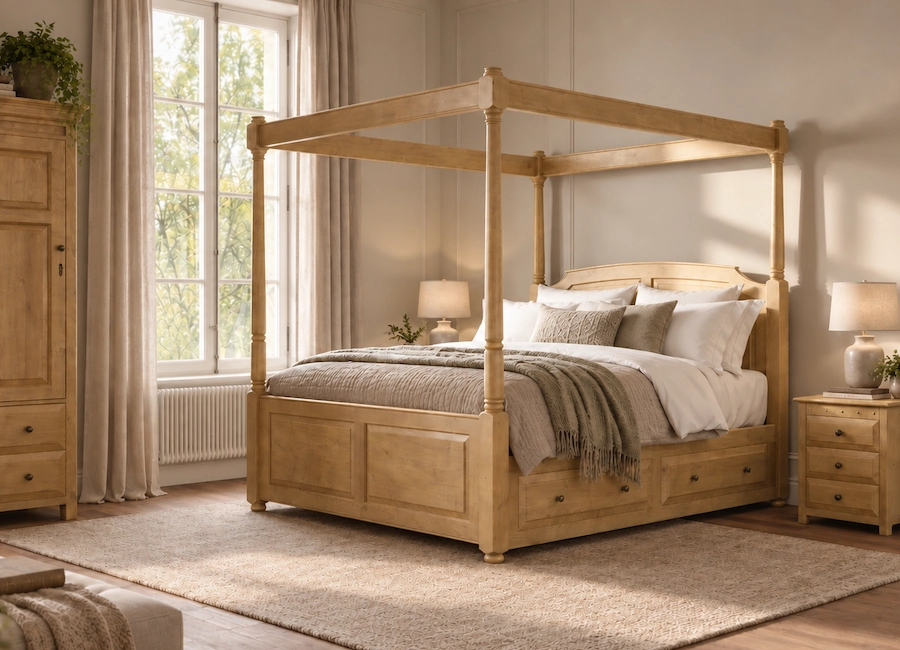
A — Area rugs
Use a rug to connect the bed and surrounding furniture. Check its position against doors and drawers, and secure it appropriately so edges do not create a trip hazard.
B — Bolster cushions
A bolster can add a different shape among square cushions. Choose a manageable number and somewhere to put them at night; decorative bedding should not make using the bed awkward.
C — Ceiling lights
A decorative fitting can be a focal point where the ceiling height allows. Check clearances and have the installation assessed by a qualified electrician.
D — Drapes
Curtains or suitable bed drapes can soften an outline. Confirm any bed-drape arrangement with the maker and keep fabric clear of heat sources and lights.
E — Everyday comfort
Choose bedding by feel, fit and care needs. A fabric description, including Egyptian cotton, does not guarantee a particular quality of sleep.
F — Four-posters
A four-poster is one possible centrepiece. Measure height, floor space and access first; a sleigh bed or simpler frame can also work in a decorative scheme.
G — Glass details
A glass lamp base or small vase can introduce a change of texture. Keep useful surfaces clear and protect wood beneath containers.
H — Headboards
Compare the width, height and detail of the headboard with your room. A strong outline can provide interest without requiring elaborate wall decoration.
I — Intricate patterns
Try a detailed fabric or wallpaper in a limited area. Repeat a colour elsewhere to connect it with simpler pieces.
J — Jewel colours
Deep blue, green or burgundy can be used as accents without buying valuable stones or filling the room with ornaments.
K — Keep the layout useful
Leave space to walk, make the bed and use storage. A grand-looking room still needs to function comfortably every day.
L — Lounge corners
If space allows, add a chair and a stable side table. Avoid creating a seating area at the expense of access to the wardrobe or bed.
M — Mirrors
Position a mirror for dressing or a view you want to reflect. Follow the fixing instructions and check wall suitability.
N — Natural textures
Visible wood grain and textured textiles can bring variety. Compare actual material and finish samples instead of expecting a photograph to establish an exact match.
O — Ottomans
A blanket box or ottoman may add storage. Check its intended use and lid instructions, and do not assume that every model is designed for seating.
P — Personal pictures
Choose artwork or photographs you enjoy. A room can feel individual without displaying expensive pieces or imitation family history.
Q — Quilts
A quilt or coverlet adds pattern and texture. Check its size, weight and cleaning needs rather than choosing it on an unsupported historical story.
R — Room measurements
Record the full bed footprint, ceiling height and furniture clearances. Keep these measurements alongside your design ideas.
S — Samples
Compare timber finishes and fabrics in the room’s own lighting. Request the information you need about the material or sourcing of a particular product.
T — Texture
Combine smoother and more textured surfaces selectively. A few clear contrasts can be easier to live with than several busy patterns.
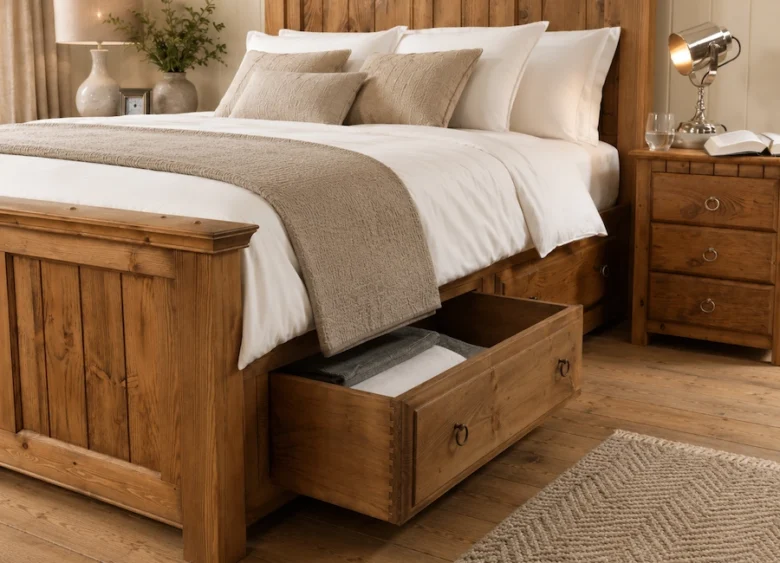
U — Under-bed storage
If considering drawers, allow space to open them and confirm availability for the chosen frame. Useful storage can reduce the need for extra furniture.
V — Visual space
Leave some areas simple so decorative pieces have room around them. You do not need a separate entrance or a large suite to use these ideas.
W — Wall detail
Paint, wallpaper or moulding can frame the furniture. Assess the wall and any necessary permissions before altering existing finishes.
X — Extra clearance
Check the space for door swings, wardrobe doors and drawers. Account for curtains and skirting boards as well as the largest pieces.
Y — Your preferences
Use the scheme to express what you enjoy, rather than treating every grand interior as a rule to follow.
Z — Zones
In a larger bedroom, distinguish sleeping, dressing and seating areas through furniture placement and lighting while keeping circulation straightforward.
Choose your starting point
Explore our wooden beds and bedroom furniture, compare finish samples or visit the showroom. Confirm dimensions, materials and available options for your chosen model before ordering.