Developing a bed design
This article looks back at an early oak-bed development account from Revival. It describes how customer interest, material checks and a showroom prototype informed a design decision. It is a historical example, rather than an announcement of a new collection today.
Start with what customers need
The original account describes customer enquiries about oak beds and furniture as a reason to explore the material further. Feedback helps identify a question to investigate; it does not guarantee demand for a new product.
For a bed, that investigation may involve its shape, dimensions, materials and the practical requirements of the people using it.
Check the material and prototype
The account describes assessing the available oak, workshop equipment and skills before making a finished example. A change of timber needs consideration of construction and finishing as well as appearance.
A prototype gives the makers a physical piece to assess. Its proportions, joints, fittings and finish can be considered together rather than judged only from a drawing.
A Balmoral-inspired oak example
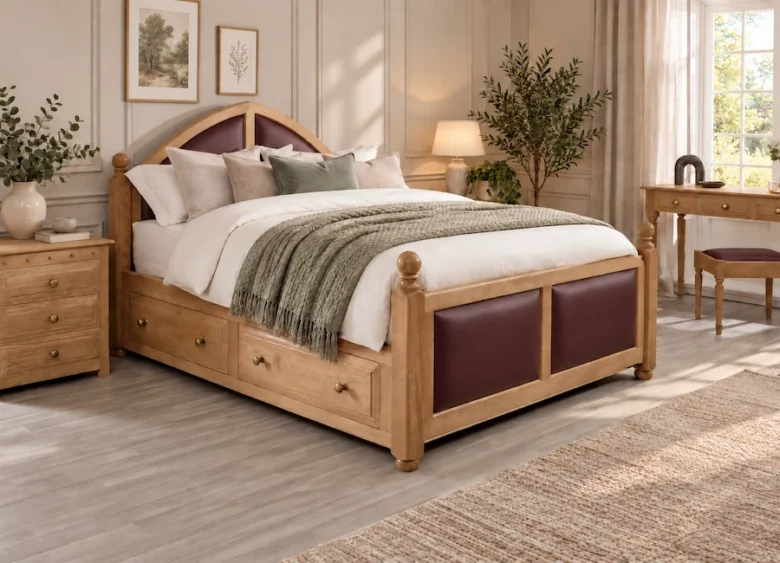
The historical account identifies the first example as an oak bed based on the Balmoral four-poster design. It records that the showroom piece sold within two weeks and generated feedback that informed the next stage.
Those details come from the original company account; they are not a claim about current stock, lead times or demand.

From an example to a current product range
Presenting a new design also involves clear photographs, dimensions, material information and order options. Today’s range can be compared through the materials guide and individual product pages.
For a particular bed or finish, confirm current availability with the team rather than relying on this earlier development story.
Discuss your bedroom plans
Explore Revival’s wooden beds and bedroom furniture, book a showroom visit or request free wood samples.