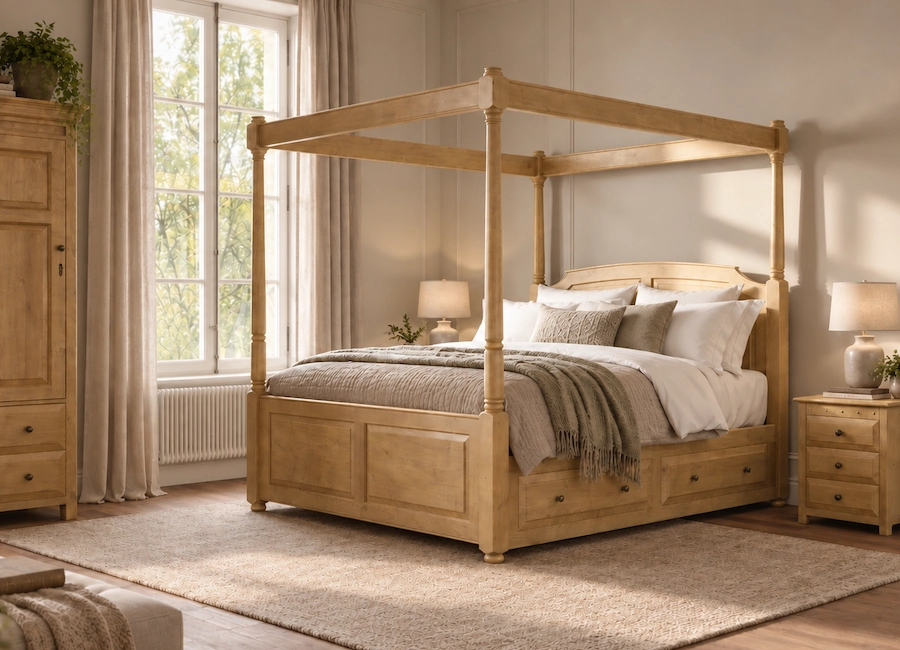
The history of handcrafted bedroom furniture is more varied than a single journey from simple beds to elaborate ones and back again. Surviving objects and design drawings show different purposes, materials and ways of making furniture across periods and places.
Three museum records offer useful starting points, followed by the way historical ideas can inform a bedroom today. The Revival Beds photographs illustrate contemporary furniture, rather than the museum objects linked below.
An ancient Egyptian folding-bed model
The Metropolitan Museum of Art records a Model of a Folding Bed from Egypt, dated approximately 1550–1300 BCE. It is a small model, about 30.8 cm long, and the museum lists its materials as wood and modern cord.
That distinction matters: a surviving model with later cord is not a complete, untouched example of an everyday ancient bedroom. It can suggest aspects of furniture design without proving that all people in a period slept in the same way.
Furniture designs on paper
Design drawings are another way to explore furniture history. The Met holds Thomas Chippendale’s A Design for a State Bed, dated 1761. Its record connects the drawing with the expanded third edition of The Gentleman and Cabinet-Maker’s Director.
A drawing shows a proposed design, rather than confirming every detail of a surviving built bed. Looking at it alongside a museum’s object record is more useful than trying to date a piece from one decorative feature alone.
Canopies, textiles and decorative detail
The Met also records an anonymous French Design for a Canopy Bed, dated approximately 1760–80. The drawing brings together the frame, canopy and draperies, showing how textiles and the furniture outline could be considered as one design.
These examples show particular approaches, rather than a rule that every bed of an era was ornate or that one later movement made elaborate furniture disappear.
Using historical inspiration in a current room
A present-day bedroom can borrow a furniture outline, a balanced arrangement or a textile detail without recreating an entire historic interior. A four-poster, sleigh bed or simpler frame can each become a starting point, depending on the room and your preferences.
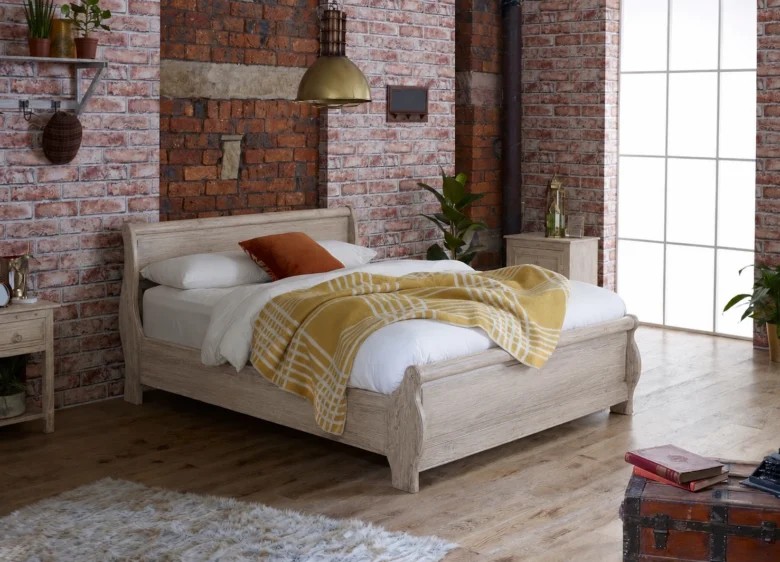
Compare the full frame dimensions, mattress size, ceiling height and access route. Ask about the material, construction, finish and care requirements of the particular product rather than assuming a historic style name guarantees a specification.
Revival Beds’ own handcrafted history
Revival Beds began in 1983 and makes wooden beds and bedroom furniture in Nottinghamshire. The current range includes different outlines and details that can be combined with the room and furnishings you already have.
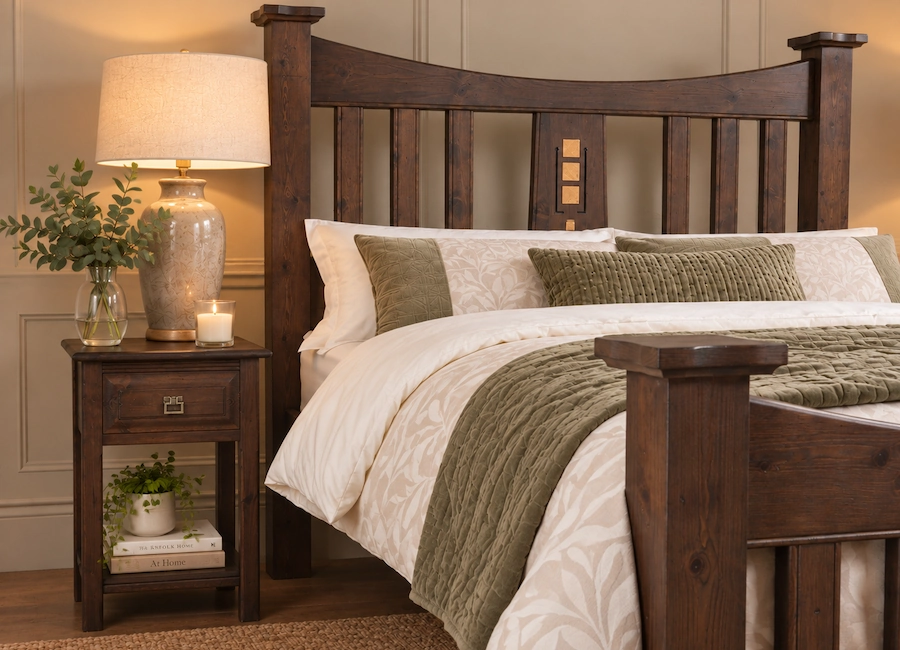
Explore wooden beds and bedroom furniture, compare finish samples or arrange a showroom visit to discuss a current design.