
A large bedroom gives you room to choose furniture with presence, but extra floor space can also make a room feel scattered. Start with how you use the bedroom, then give each piece a clear role. The aim is a room that feels settled and comfortable, with space to move between the furniture.
1. Plan around the bed’s full footprint
Position the bed before deciding where everything else will go. Mark out the external frame dimensions on the floor, rather than using the mattress size alone. A sleigh bed, for example, may project beyond the mattress at the head and foot.
Consider the view from the doorway, access to windows and the routes to wardrobes and drawers. If you are considering a larger bed, check delivery access too, including doorways, stairs and turns on the route to the bedroom.
2. Balance the furniture beside it
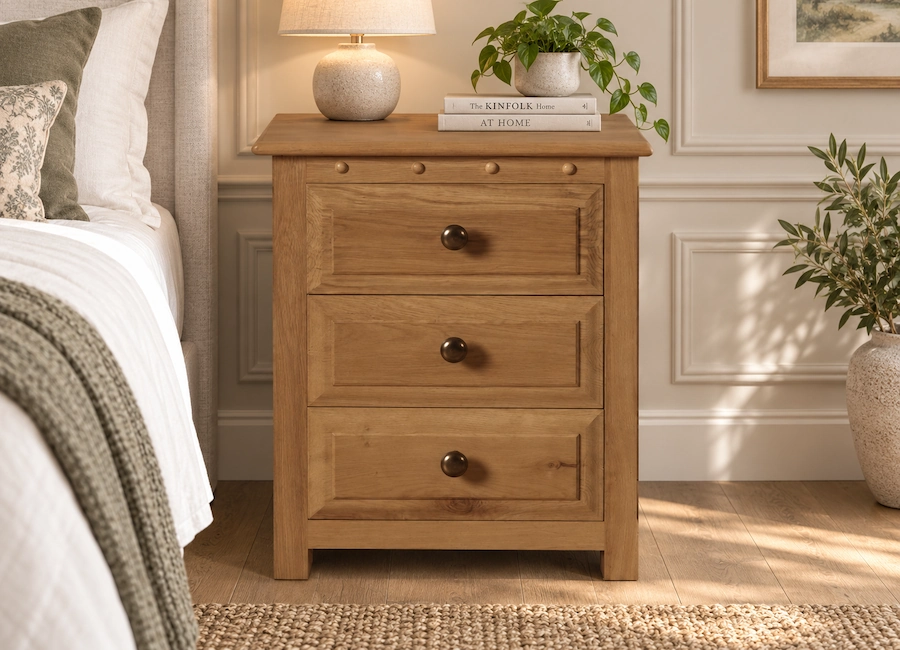
Look at the bed and bedside furniture as one composition. A very small cabinet can look lost beside a substantial frame, while a bulky cabinet may crowd a window or doorway. Compare the cabinet’s width and height with the bed and the wall space available.
Think about use as well as appearance: a lamp, reading glasses and a book need a practical surface, and the storage below should be useful. Two matching cabinets can create a calm arrangement, but they are not essential if the room needs different functions on each side.
3. Give clothes storage its own place
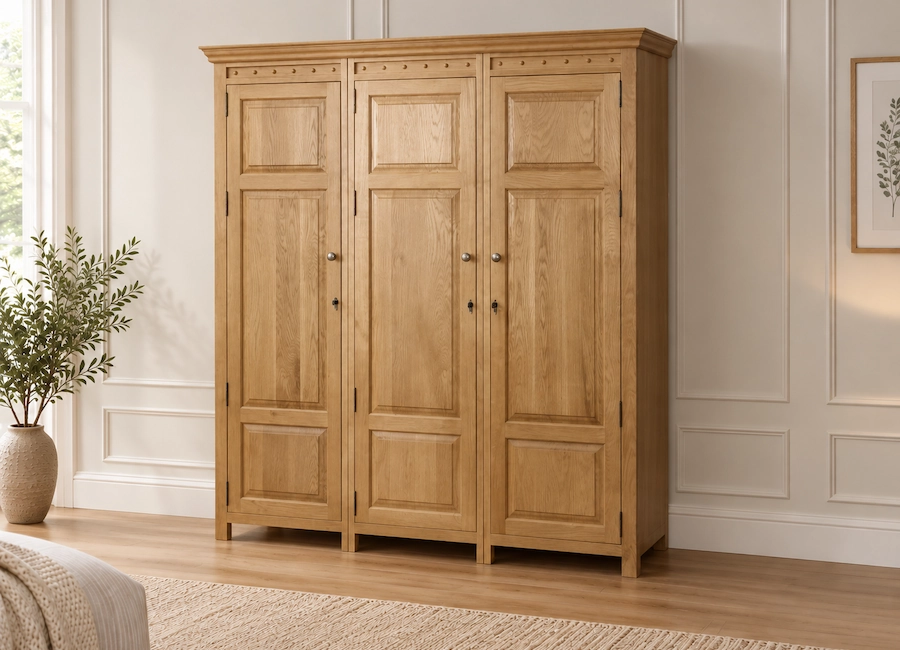
Plan wardrobes and chests around the clothes you actually need to store. Decide what should hang, what can be folded and which everyday items need easy access.
Keep enough space to use doors and drawers comfortably. Check each product’s dimensions and opening arrangement, and consider how the storage area works when more than one person is using the bedroom.
4. Create a second useful zone
A dressing table, a reading chair or a quiet seating corner can give a generous room another purpose. Choose a place that supports the activity: useful light for dressing, or a peaceful corner for reading.
Define the area through the furniture arrangement rather than adding pieces simply to fill gaps. An uncluttered space between the bed and the second zone can help the whole room feel more deliberate.
5. Coordinate through a few shared details
Furniture does not have to come from one supplier to work together. Look for a common thread such as a wood tone, a similar level of visual weight, a recurring curve or complementary handles.
If buying new wooden furniture to sit beside existing pieces, compare physical finish samples in the room. Look at them in daylight and under your evening lighting before deciding. Revival Beds offers standard wood stains and optional stain colour matching; contact the team to discuss the colour you have in mind.
6. Use additional storage only where it earns its place
A chest, linen box or suitable under-bed storage can help with spare bedding and seasonal belongings. Start with what you need to store, then decide which type of furniture makes access easiest.
For under-bed drawers, check compatibility with the chosen bed and allow for their opening space. Do not assume every model has the same drawer arrangement or opens from the same side.
7. Leave room for the furniture to breathe
A large bedroom does not need furniture against every wall. After placing the essentials, pause before adding more. Check that you can move easily from the doorway to the bed, storage and windows without weaving between pieces.
Build the finishing layer gradually with lighting, bedding and a small number of accessories. It is easier to judge what the room needs once the main furniture is in place than to commit to every detail at the start.
Bring the plan together
Begin with measurements, choose the bed and useful storage, then decide whether the room needs a second zone. Coordinate finishes thoughtfully and keep the routes between furniture clear.
Explore Revival Beds’ solid wood beds and bedroom furniture, request wood samples to compare finishes at home, or book a showroom visit to discuss your plans.