
Light oak can make a bedroom feel warm and open, but it does not have to mean white walls and pale bedding. Its natural grain works with a wide range of colours, textures and styles. The key is to choose a direction for the room, then repeat a few tones and materials so the furniture feels part of the plan.

Revival Beds offers oak beds in several finishes, including natural and limed oak. If you are choosing between finishes, request a sample and look at it in your room’s natural and artificial light before deciding on paint, textiles or accessories.
1. Start with the oak tone
Notice the grain and undertone of your bed and furniture first. Warm oak sits comfortably with cream, stone, camel and other earthy shades. A paler or limed finish can work well with cooler whites, soft grey and blue. Use a finish sample beside your wall colour and bedding before committing to a larger scheme.
2. Build a soft neutral base
Warm white, oatmeal, linen and soft taupe make a calm backdrop for oak. Layer two or three close shades rather than matching everything exactly: for example, ivory bedding, a sand-coloured throw and a slightly deeper rug.
3. Add a grounded green
Sage, olive and muted forest green bring contrast without making the room feel busy. Try the colour on a painted wall, cushion or bedside lamp, then repeat it in one smaller detail across the room.
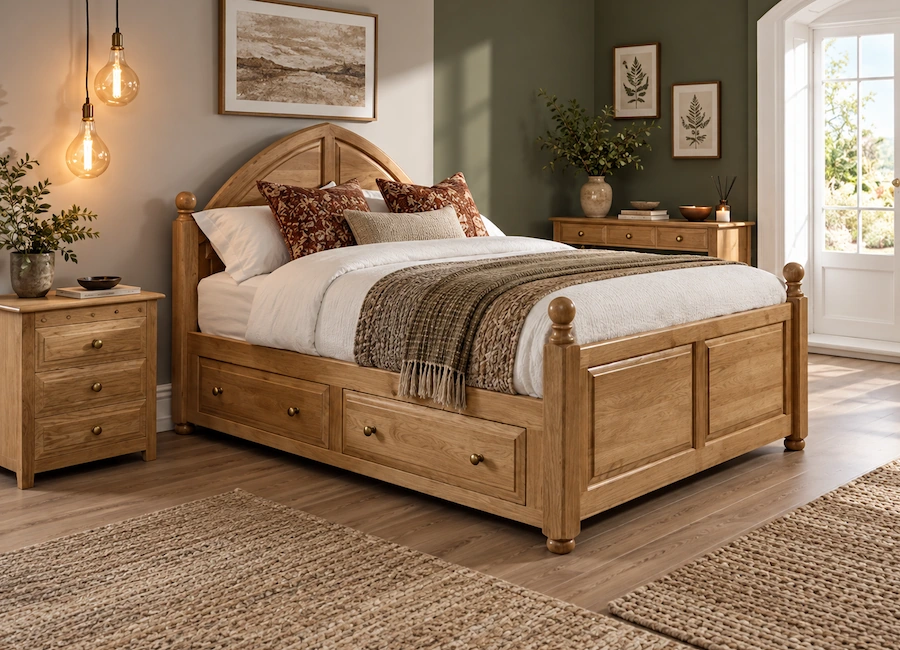
4. Use blue for a cooler balance
Dusty blue and deeper navy both sit well beside oak. Pale blue keeps the room light; navy gives the bed more definition. If you choose a strong wall colour, keep larger textiles simple so the wood remains visible.
5. Bring in a warm accent
Terracotta, rust, muted red or ochre can pick up the warmth in natural oak. Use a limited accent through a cushion, artwork or lampshade instead of spreading a strong colour across every surface.
6. Mix patterns by scale
A small check, fine stripe or botanical print can sit beside a larger, quieter pattern. Keep one colour in common so the combination feels deliberate. If the headboard or bedding already has a strong pattern, let nearby surfaces rest.
7. Layer texture, not clutter
Oak has a visible grain, so it pairs naturally with linen, wool, cotton, woven baskets and matte ceramics. A few different textures add depth without needing more objects on the bedside table.
8. Pair pale oak with dark details
Black, charcoal or dark bronze details can sharpen a light scheme. Use them in small repeated touches, such as a lamp base, picture frame or drawer pull, to make the contrast feel connected.
9. Let one piece lead
A bed, wardrobe or chest can be the main visual anchor. Give it enough space to stand out, and avoid crowding it with several other large pieces or tall accessories.
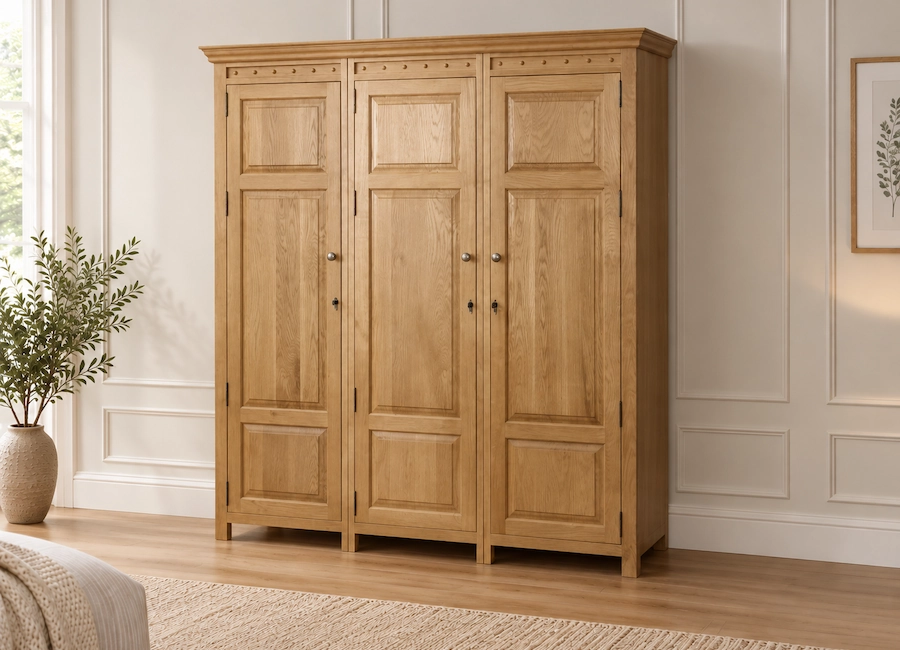
10. Coordinate without matching everything
Matching furniture can create a unified look, but a bedroom need not be a complete suite. Combine oak with painted or upholstered pieces by repeating a shared colour, shape or material elsewhere in the room.
11. Use lighting to show the finish
A bedside light creates a useful reading pool; a second light source elsewhere helps avoid a single bright spot. Warm-white bulbs generally bring out the warmth of natural oak, while daylight can make the same finish appear cooler. Check the room at the times you use it most.
12. Make the room personal
Finish with a small number of things that matter to you: a framed print, a favourite book, a plant or a useful tray. Leave some open surface around them. The room will feel considered while the oak furniture remains easy to see and use.
Explore oak beds and bedroom furniture
Once you have a colour direction, browse our oak beds and solid wood bedroom furniture. Natural oak and other wood finishes can look different under your own lighting, so compare samples in the room before you decide.