Classic bedroom furniture starts with useful shapes and a layout that works for your room. You might prefer a curved bed, panelled storage or a simple timber finish, but the pieces still need to fit your belongings, your routines and the available space.
These five furniture choices can form the basis of a traditional-inspired scheme. Compare the individual model’s dimensions, materials, finish and care requirements before ordering, rather than relying on a style label alone.
1. A wooden bed with a clear outline
A sleigh bed, four-poster or simpler wooden frame can each give a bedroom a different focal point. Let the room’s proportions guide your choice: check the full frame dimensions as well as the mattress size, including projecting posts or a curved footboard.
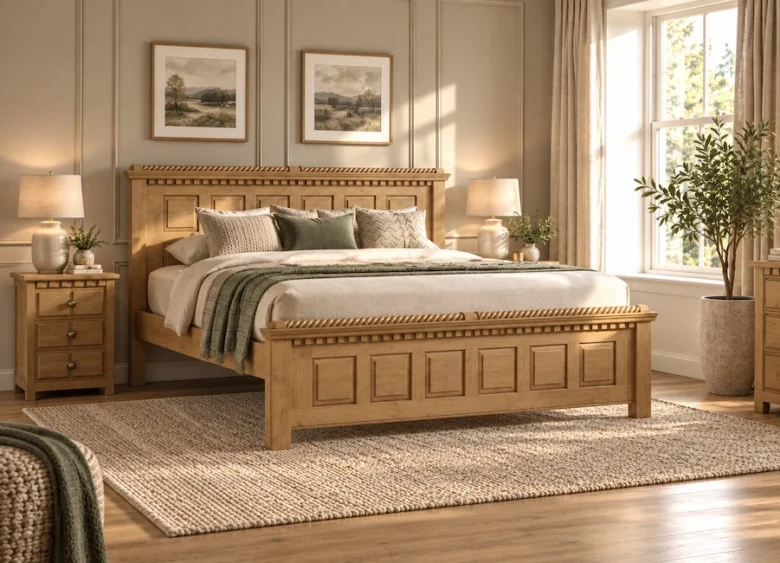
Leave space to walk around the bed and open nearby furniture. For a four-poster, include ceiling height, sloping areas and nearby fittings in the measurements. Browse wooden beds to compare current designs.
2. Bedside furniture at a useful height
A bedside table provides an open surface; a cabinet adds enclosed storage. Choose according to what you keep beside the bed, allowing room for a reading light, everyday essentials and any drawers or doors.
Compare the height with the top of your mattress. A balanced pair can support a more formal arrangement, but the two sides need not be identical if the room or your routines call for something different. Connect them through a similar finish, scale or shape.
3. A chest of drawers with the right storage layout
A wide chest and a taller, narrower one use space differently. Check drawer sizes and opening clearance against the clothes or other belongings you want to put away. Keep doors, windows and the route through the room usable.
A chest can also provide a place for a picture or a small group of favourite objects. Leave enough clear surface for the piece to remain useful and follow the maker’s installation and safety instructions.
4. A wardrobe or cupboard chosen for its contents
List what needs hanging, folding or storing before choosing the internal arrangement. Check the outside dimensions, door swing and the space needed to bring the furniture into the room. A cupboard with shelves and drawers serves a different purpose from a full hanging wardrobe.
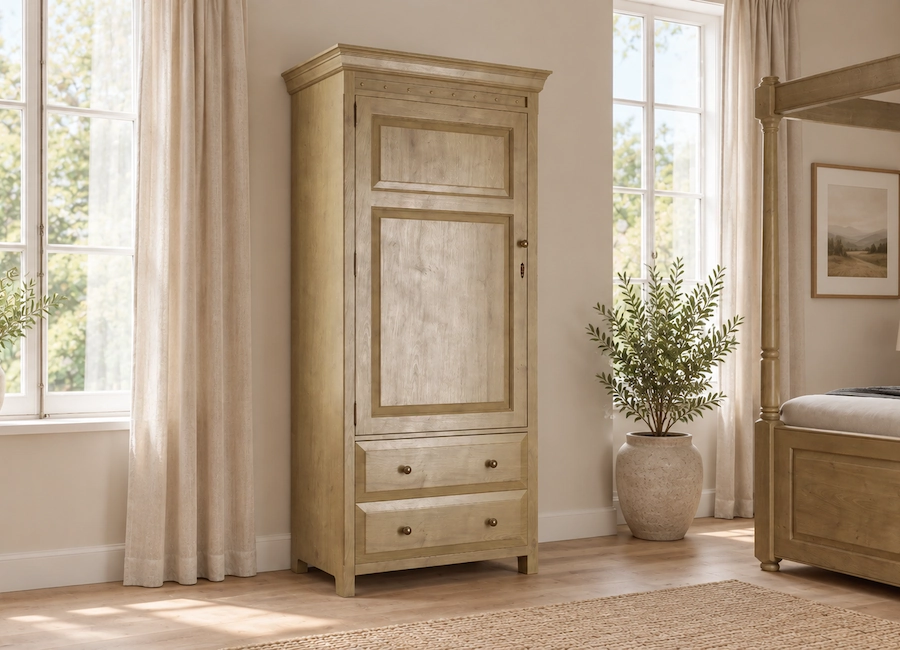
Panelled doors or a familiar timber finish can connect the piece with a traditional-inspired room. Compare bedroom furniture by its practical specification as well as its appearance.
5. A dressing table with space to use it
A dressing table can give a mirror, smaller items and a seat a dedicated place. Measure the depth and width, the space for a stool or chair and any drawers you want to open. Think about the light where you will use the mirror.
Curved and simpler designs can both sit alongside classic furniture. Choose a finish or repeated detail that connects the pieces, while leaving enough room to use each one comfortably.
Bring the pieces together around your room
If you enjoy Georgian or other period-inspired interiors, borrow a balanced layout, a furniture outline or a restrained group of colours rather than trying to recreate an entire historic room. Work with the features you already have and check their condition and any restrictions before making alterations.
Compare current finish samples alongside your flooring, textiles and existing furniture. You can change smaller details such as bedding or artwork as your taste develops without assuming a furniture purchase will increase in value or remain unchanged forever.
For more ways to combine furniture and accessories, explore our bedroom style guide, or arrange a showroom visit to discuss current Revival Beds options.