A documented history can make an antique furniture story more interesting than a headline percentage. An auction record for a 1935 Robert “Mouseman” Thompson bedroom suite gives us a specific example to examine.
The story concerns antique furniture sold at auction, rather than a forecast of what a newly purchased bed or bedroom suite will be worth.
A commission recorded in the auction catalogue
Tennants’ 2009 catalogue records that Miss Smith of The Hall, Bishop Middleham, commissioned a bedroom suite in May 1935. Its account says the total paid in 1936 was £58 including delivery.
The catalogue entry for the dated 4ft 6in bedstead records a sale result of £1,000. A separate entry for the dressing-table stool records £520. The catalogue lists the pieces separately, so read each result alongside its lot description and sale date.
Read the provenance as well as the price
The useful detail is the documented commission, the date and the description of the individual pieces. An auction catalogue can help connect an object with its history; a general description of a maker does not establish the provenance of every piece.
Read the primary records for the bedstead and stool for their descriptions and reported results.
Choose new furniture for how you will use it
An antique sale does not show that another maker’s new furniture will appreciate in value. For a bedroom purchase, compare dimensions, construction, storage, finish and aftercare with your needs and budget.

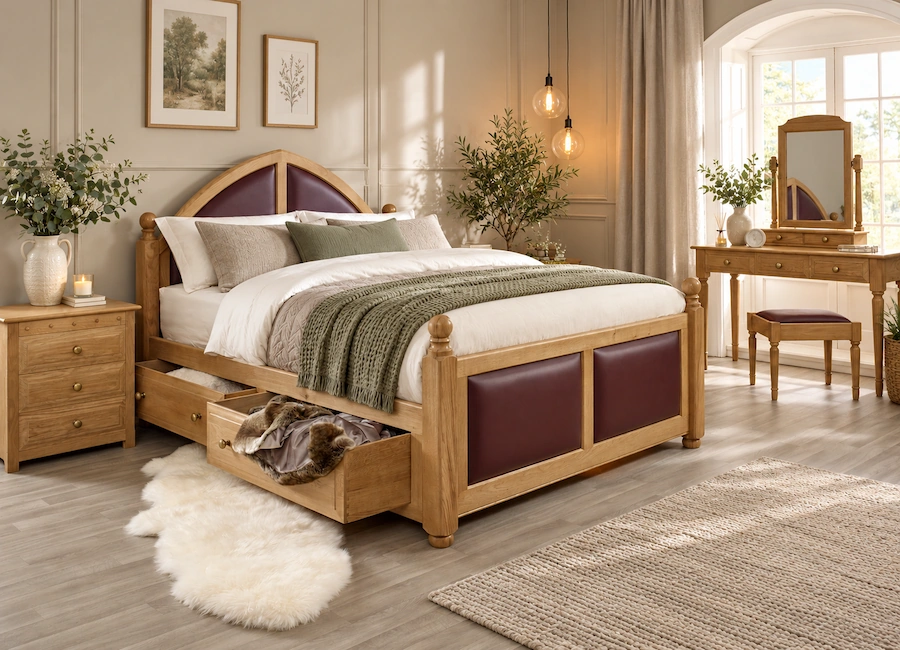
Revival product image for illustration, not a photograph of the Mouseman suite.
Revival has made wooden beds and furniture since 1983. Its current ranges can be considered for their design and practical use without predicting an auction value decades from now.
Explore the current range
Browse Revival’s wooden beds and bedroom furniture, book a showroom visit or request free wood samples.